- 1. Why is PP non-woven fabric an efficient environmentally friendly material?
- 2. Data Demonstration: Reusing It 11 Times Can Achieve Environmental Break-Even
- 3. A Further Environmentally Friendly Choice: RPET Non-Woven Bags
- 4. How Can Brand Procurement Maximize the Environmental Value of Non-Woven Bags?
- 5. As a Manufacturer, How Can We Help Create a Closed-Loop Environmental System?
- 6. Frequently Asked Questions (FAQ)
- Conclusion
Under the premise of repeated use, non-woven bags are a highly cost-effective environmentally friendly alternative. Non-woven fabric itself is not a naturally biodegradable material. Mainstream products are made from polypropylene (PP) or recycled polyester (RPET), which are plastic-derived materials. The environmental value of non-woven bags does not come from the “green attributes” of the material itself, but from spreading out the production carbon footprint through multiple uses after replacing single-use plastic bags.
A standard PP non-woven bag only needs to be reused 11 times for its full life-cycle environmental impact to become lower than that of a single-use plastic bag; under the same conditions, a cotton bag needs to be reused 131 times to achieve the same effect. For brands looking for a Non-woven bag supplier or planning to launch a PP non-woven bag OEM project, the core environmental value of non-woven bags lies in using fewer resources and less energy to support a longer service life.
1. Why is PP non-woven fabric an efficient environmentally friendly material?
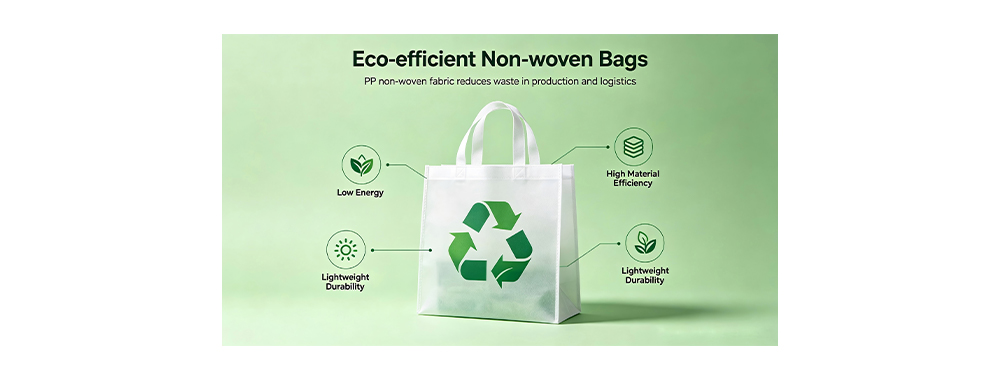
The production process of PP (polypropylene) non-woven fabric differs from traditional textiles — it fixes fibers into fabric through thermal bonding or chemical bonding, eliminating the spinning and weaving stages. This means:
- Lower production energy consumption: Compared with cotton textiles, the manufacturing process of PP non-woven fabric significantly reduces water consumption and energy use;
- Higher material utilization rate: Scrap materials can be directly recycled and remelted for production, resulting in lower production waste rates than traditional fabrics;
- Lighter and more durable finished products: Under the same load-bearing capacity, PP non-woven bags are more tear-resistant than paper bags and lighter than cotton bags, resulting in a lower carbon footprint during transportation and storage.
Of course, PP is essentially a plastic material. If it is discarded improperly after use, it can also create risks of environmental pollution. However, as life-cycle assessment data shows, material type itself is not the only measurement criterion; usage efficiency is the key factor.
2. Data Demonstration: Reusing It 11 Times Can Achieve Environmental Break-Even
The UK Environment Agency and multiple independent life-cycle assessment (LCA) studies have provided clear comparative data:
| Material | Number of Reuses Required (to Offset the Impact of a Single-Use Plastic Bag) |
| Paper bag | 3–4 times |
| Thick LDPE plastic bag | 4–5 times |
| PP non-woven bag | 11 times |
| Cotton bag | 131 times |
A study by Nanyang Technological University in Singapore further pointed out that among all common shopping bags, reusable PP non-woven bags are the most environmentally friendly choice—provided that they are reused more than 50 times.
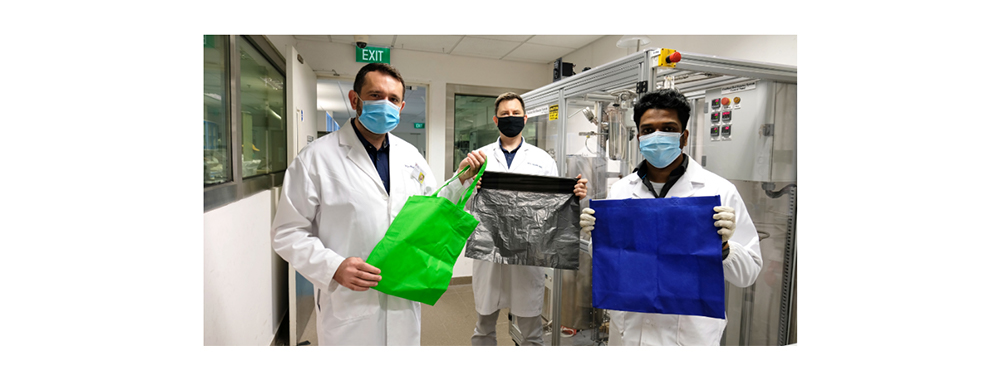
This set of data reveals a core logic: the environmental friendliness of non-woven bags does not depend on whether the material is “natural,” but rather on the extent to which it can replace single-use consumption. For retail, promotional, and everyday shopping scenarios, it is entirely realistic for a well-designed, well-made non-woven bag to be used dozens or even hundreds of times.
3. A Further Environmentally Friendly Choice: RPET Non-Woven Bags
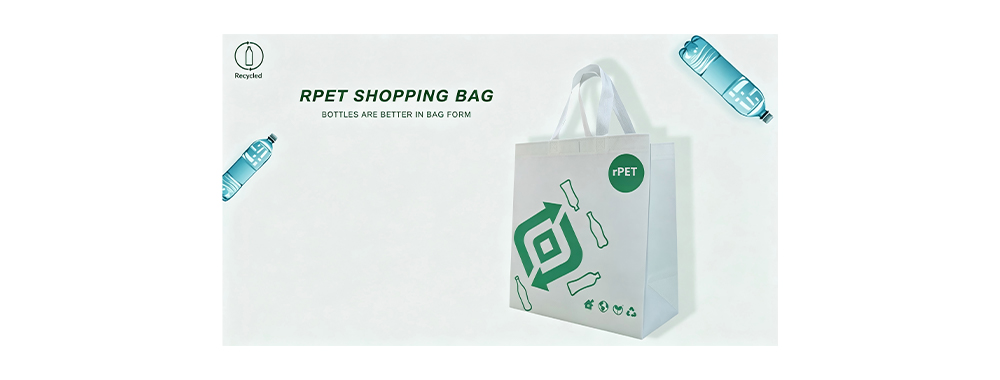
If you want to take environmental performance a step further, RPET (recycled polyester) non-woven fabric is currently the most mature upgrade option. RPET is made from recycled plastic bottles. Compared with virgin PP, it can reduce energy consumption by approximately 60%. Each standard-sized bag produced can divert approximately 6–8 plastic bottles into the recycling stream.
More and more international brands have adopted RPET as a benchmark requirement for sustainable procurement. For brands planning to undertake a Non-woven bag OEM project, choosing RPET not only means reducing their carbon footprint, but also demonstrates tangible support for the circular economy.
4. How Can Brand Procurement Maximize the Environmental Value of Non-Woven Bags?
As a brand owner or procurement decision-maker, your choices directly affect whether non-woven bags can ultimately deliver their environmental benefits. The following recommendations are worth considering:
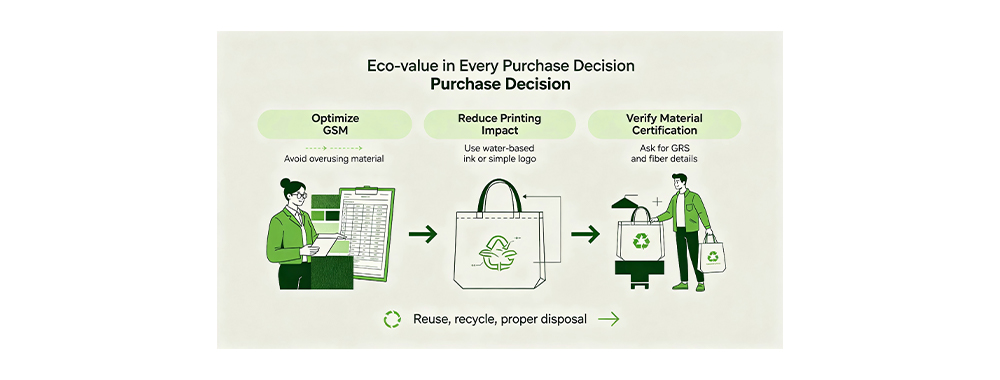
4.1 Control Fabric Weight and Avoid Overdesign
The commonly used fabric weight for non-woven bags is 60–120 GSM. For general retail and promotional purposes, 80–90 GSM is already sufficient to meet everyday load-bearing needs. Excessively high fabric weight not only increases material consumption but also raises the carbon footprint associated with transportation. When communicating with a Non-woven bag factory, clearly specify the intended use and load-bearing requirements, and avoid excessive material usage simply to achieve a “thicker feel.”
4.2 Simplify the Printing Process
Complex lamination, hot stamping, or multi-color printing can increase production energy consumption and may also affect subsequent recycling. Give priority to water-based ink screen printing or a single-color Logo. This can maintain brand recognition while reducing the environmental burden. For PP non-woven bag OEM projects, this is a balance between cost, aesthetics, and environmental protection.
4.3 Require Material Transparency and Certifications
A responsible Non-woven tote bags manufacturer should be able to clearly specify the fabric composition (virgin PP, RPET, or the respective blend ratio) and, where possible, provide third-party certifications such as GRS (Global Recycled Standard). Material transparency is the foundation for brands to build consumer trust.
5. As a Manufacturer, How Can We Help Create a Closed-Loop Environmental System?
The environmental potential of non-woven bags can only be fully realized through coordination across the entire process, from source design to end-of-life recycling. As a manufacturer, we recommend optimizing the following areas:
- Lightweight structural design: Reduce material usage through pattern optimization while ensuring load-bearing capacity and durability;
- Single-material design: Avoid combining multiple materials to facilitate end-of-life recycling and processing;
- User education: Include usage reminders when delivering products to encourage end users to reuse them;
- Co-building a recycling system: During the production process, achieve 100% internal reuse of production scraps—all remaining PP or RPET waste from cutting is crushed and melted down to produce recycled material pellets, which are then used to manufacture low-GSM auxiliary materials or filling products, creating a closed-loop system within the factory.
These measures have controllable costs but can significantly improve the sustainability performance of the supply chain. They are also becoming an important consideration for international brands when selecting Non-woven bag OEM partners.
6. Frequently Asked Questions (FAQ)
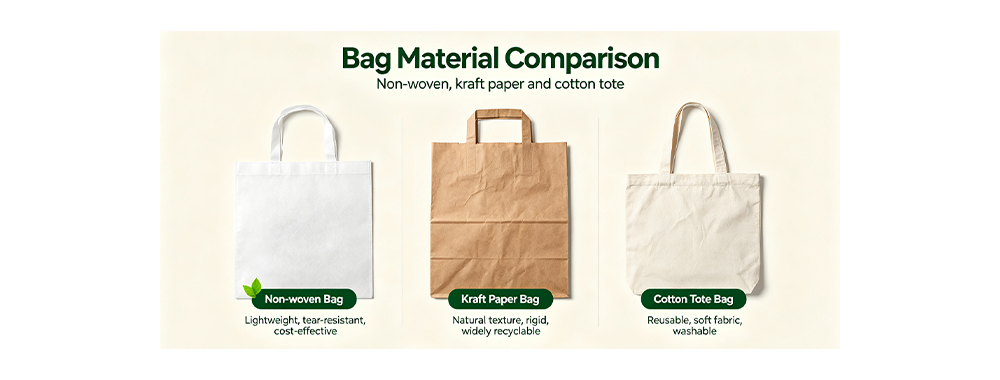
Q1: Which Is More Environmentally Friendly: Non-Woven Bags, Paper Bags, or Cotton Bags?
A: It depends on the frequency and context of use. In terms of the carbon footprint of a single use, disposable paper bags have the lowest impact, but they have poor load-bearing capacity and are prone to tearing, so they can typically only be used once. Although cotton bags are biodegradable, their production consumes a tremendous amount of water, and they need to be reused 131 times to offset their environmental impact. PP non-woven bags only need to be reused 11 times to achieve environmental break-even, while also offering a combination of durability and lightweight convenience.
Therefore, if you need a bag that consumers can carry repeatedly and that is suitable for everyday shopping or promotional scenarios, non-woven bags offer the most balanced combination of cost-effectiveness and environmental performance.
Q2: How Many Times Can a Non-Woven Bag Typically Be Used? What Factors Affect Its Lifespan?
A: Under normal conditions of use, an 80–100 GSM PP non-woven bag can easily be used 50–100 times or more, far exceeding the 11-use environmental break-even point. Key factors affecting durability include:
- GSM (fabric weight): The higher the GSM, the thicker the fabric and the stronger its load-bearing capacity;
- Sewing workmanship: Reinforced handle stitching and bound edges at the bottom can significantly increase the maximum load-bearing capacity;
- Usage scenarios: Carrying sharp objects or prolonged exposure to direct sunlight can accelerate aging.
For brands, choosing to work with a well-made Non-woven bag factory and ensuring proper sewing density and handle reinforcement are in place is key to extending product lifespan and maximizing its environmental value.
Q3: What Is the Difference Between RPET Non-Woven Bags and PP Non-Woven Bags? Which One Should I Choose?
A: The two are very similar in appearance and feel, but their raw material sources are different:
| Comparison Item | PP Non-Woven Bag | RPET Non-Woven Bag |
| Raw material | Virgin polypropylene | Recycled plastic bottles |
| Energy consumption | Standard level | Approximately 60% lower than virgin PP |
| Cost | Lower | Slightly higher |
| Brand premium | Standard | Strong sustainability attributes |
If your brand positioning emphasizes ESG messaging, or your target customers have clear requirements for environmental certifications, RPET is the better choice. If your budget is limited and the bags are mainly intended for large-scale promotional distribution, standard PP non-woven bags can also deliver good environmental performance when used properly. When communicating with a Non-woven bag supplier, you can request samples and price comparisons for both materials and then make a decision based on the project budget.
Q4: Can Logos Be Printed on Non-Woven Bags? What Are Some Relatively Environmentally Friendly Printing Methods?
A: Yes, and printing is a core part of non-woven bag customization. Relatively environmentally friendly printing options include:
- Water-based ink screen printing: Contains no volatile organic compounds (VOC), offers good color saturation, and is suitable for single-color or two-color Logos.
- Heat transfer printing: Suitable for complex patterns, but has slightly higher energy consumption.
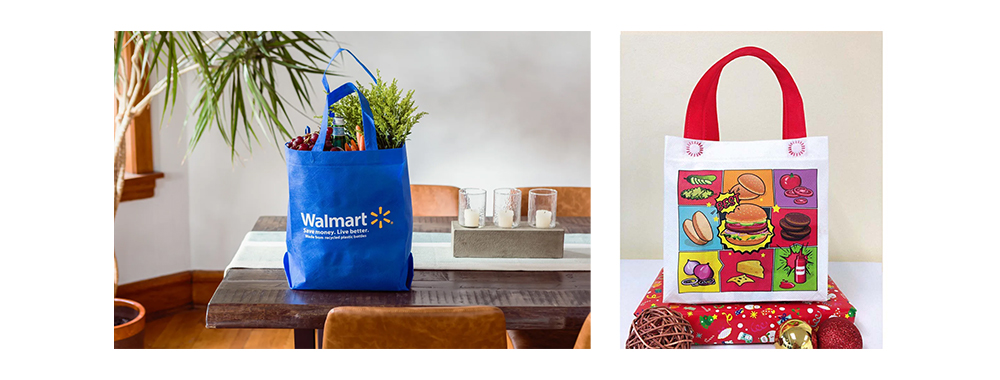
Note: Lamination (BOPP lamination) and hot stamping processes can make recycling more difficult. However, if there are specific requirements for water and oil resistance, laminated non-woven bags are still the optimal solution.
For brands planning to undertake PP non-woven bag OEM projects, it is recommended to confirm the printing process during the sampling stage and require suppliers to specify the type of ink used. This not only affects environmental performance but also relates to consumers’ sense of health and safety when they come into contact with the product.
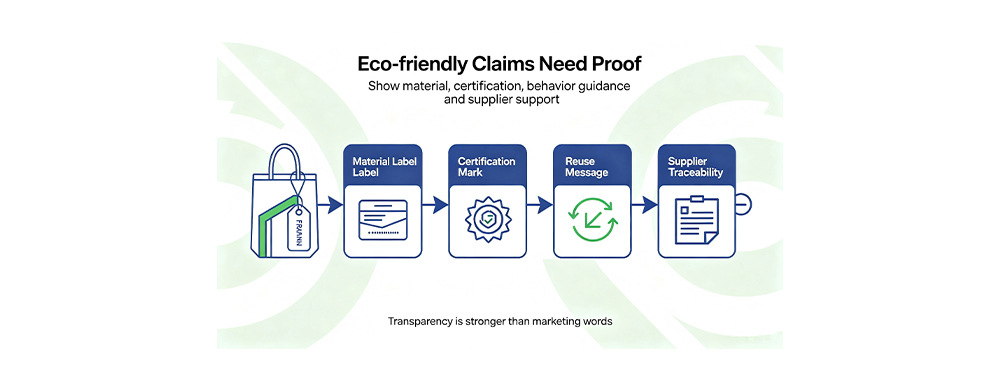
Q5: How Can I Prove to Consumers That My Non-Woven Bags Are Environmentally Friendly?
A: Transparent information disclosure is more convincing than any marketing message. You can build trust through the following aspects:
- Material labeling: Clearly indicate the fabric composition on the care label or hangtag (such as “100% RPET” or “100% Polypropylene”);
- Third-party certifications: Such as GRS (Global Recycled Standard);
- Usage reminders: Add a message on the packaging such as “Please reuse this bag to reduce single-use consumption” to encourage consumer behavior;
- Supplier endorsement: Work with a Non-woven bag OEM partner that can provide complete material traceability reports, ensuring that your environmental claims are supported by verifiable evidence.
Conclusion
Are non-woven bags environmentally friendly? From the perspective of a full life-cycle assessment, the answer is yes — they effectively replace the consumption of single-use plastic bags through the use of fewer resources, lower energy consumption, and a longer service life. Their environmental benefits are built on the behavior of “reuse” rather than the natural attributes of the material itself.
For brands, the significance of purchasing non-woven bags lies not only in responding to plastic reduction policies, but also in ensuring that these bags can truly be reused by consumers through reasonable material selection, fabric weight control, and durable design.