- Ⅰ.9 Compelling Reasons to Switch to Non-Woven Bags
- 1. Eco-Friendly & Reusable — Maximize Brand Exposure Over Time
- 2. Superior Breathability — Lock In Freshness and Texture
- 3. High Tensile Strength & Tear Resistance — Minimize After-Sales Losses
- 4. Grease-Proof & Leak-Proof — Streamline Your Packaging Workflow
- 5. Lightweight & Space-Efficient
- 6. Versatile Printability — Unleash Full Brand Design Potential
- 7. Flexible MOQ for Small Runs, Significant Cost Savings at Scale
- 8. Foldable Design — Save Valuable In-Store Space
- 9. Food-Grade Safety Compliance
- Ⅱ.Frequently Asked Questions (FAQ)
- Ⅲ.Conclusion
Non-woven bags are rapidly becoming the go-to packaging solution for an increasing number of bakery brands worldwide. They deliver outstanding all-around performance across multiple dimensions—preserving product freshness and taste, boosting operational efficiency, reducing packaging costs, amplifying brand visibility, and ensuring food safety—giving them a clear competitive edge over traditional paper bags and plastic bags.
In the bakery industry, packaging does far more than simply contain a product. It directly impacts product freshness, brand perception, and the overall customer experience.
For bakeries, cafés, and food-service operators, selecting the right packaging material is both a day-to-day operational decision and a strategic lever for increasing product value and customer satisfaction. Thanks to their exceptional functionality, cost-effectiveness, and visual versatility, non-woven bags have gained widespread adoption across the bakery sector—serving everyone from independent artisan bakeries to large-scale retail chains.
Below, we break down nine professional reasons why non-woven bags deserve a place in your packaging strategy.
Ⅰ.9 Compelling Reasons to Switch to Non-Woven Bags
1. Eco-Friendly & Reusable — Maximize Brand Exposure Over Time
One of the most compelling advantages of non-woven bags is their ability to break free from the “single-use” paradigm.
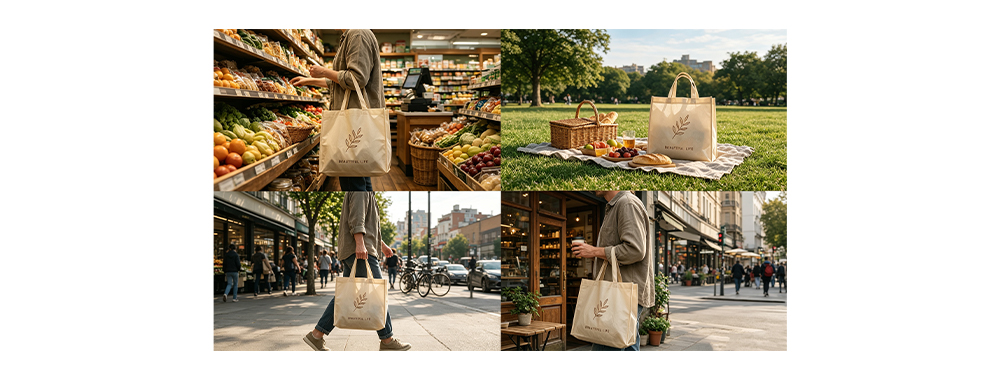
Unlike most paper or plastic bags that are discarded after one use, non-woven bags are built to last. Customers tend to keep and reuse them—for grocery runs, carrying everyday items, or weekend picnics.
This means your brand logo travels with the bag across a wide range of daily scenarios, earning you organic, long-term brand impressions at zero additional media cost. At the same time, the reusable nature of non-woven bags directly reduces packaging waste, helping your brand communicate a responsible, sustainability-minded ethos without the need for extra marketing spend.
2. Superior Breathability — Lock In Freshness and Texture
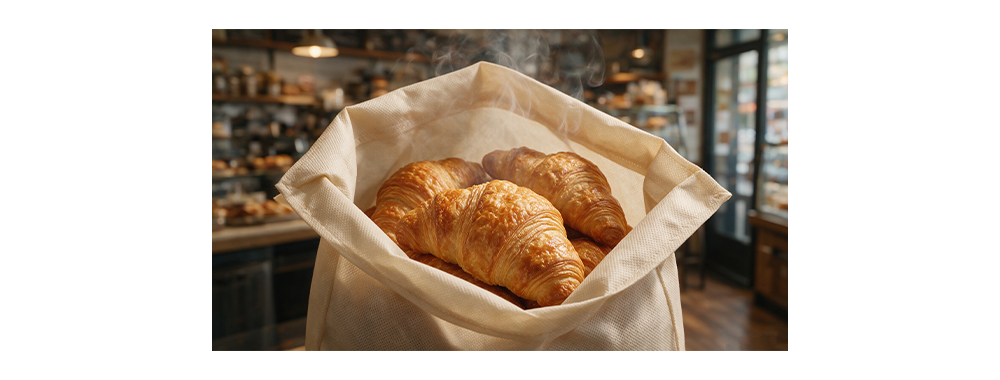
Breathability is a unique advantage that non-woven bags hold over fully sealed plastic bags.
The micro-pores between non-woven fibers allow a controlled amount of air circulation, significantly reducing the risk of condensation build-up inside the bag.
When freshly baked, still-warm bread is placed inside, moisture cannot accumulate—preventing crispy crusts from going soft and soggy.
For refrigerated cakes with buttercream or whipped cream fillings, the breathable fabric prevents water droplets from forming on the inner surface during temperature fluctuations in transit, protecting delicate frostings from melting or wrappers from getting damp.
For customer pick-up or short-distance delivery (within 3 hours), non-woven bags preserve that just-out-of-the-oven freshness better than conventional alternatives.
3. High Tensile Strength & Tear Resistance — Minimize After-Sales Losses
At equivalent GSM (grams per square meter), food-grade non-woven bags offer roughly 2 to 3 times the tensile strength of thin kraft paper bags.
Combined with stitch-reinforced handles, they can safely carry an 8-inch decorated cake, multiple loaves of bread, and a full set of cutlery without handle breakage or bottom blowouts.
Moreover, non-woven materials do not become brittle or crack when exposed to moisture or grease—unlike standard paper bags—making them highly resilient against the squeezing and friction that occur during delivery.
This reliability directly translates into lower return and replacement rates caused by packaging failure, boosting customer satisfaction scores.

4. Grease-Proof & Leak-Proof — Streamline Your Packaging Workflow
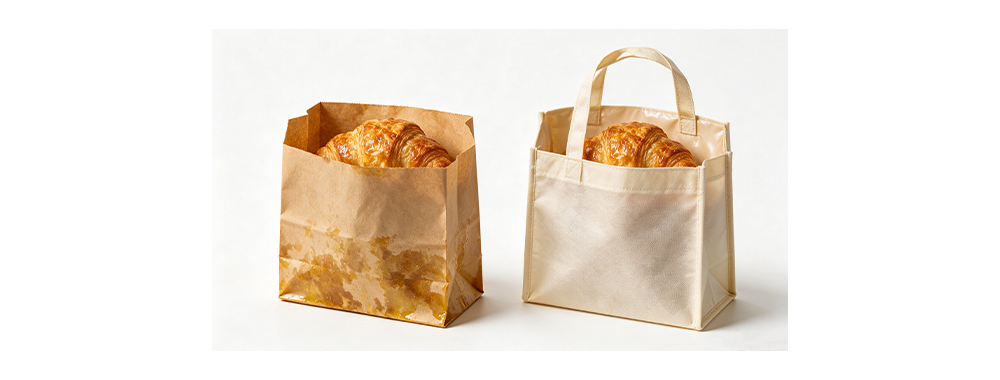
Modern modified-film laminated non-woven bags designed specifically for bakery applications now offer excellent grease-resistant and leak-proof performance—no additional PE liner required.
Whether it’s butter seeping from a freshly baked croissant, molten filling from a basque cheesecake, or dipping sauce from a pretzel knot, grease will not penetrate through to the outside, keeping customers’ clothing and belongings clean.
This capability reduces the packaging process from “multi-layer wrapping” to a single-step operation, saving valuable time during peak hours and improving order throughput.
5. Lightweight & Space-Efficient
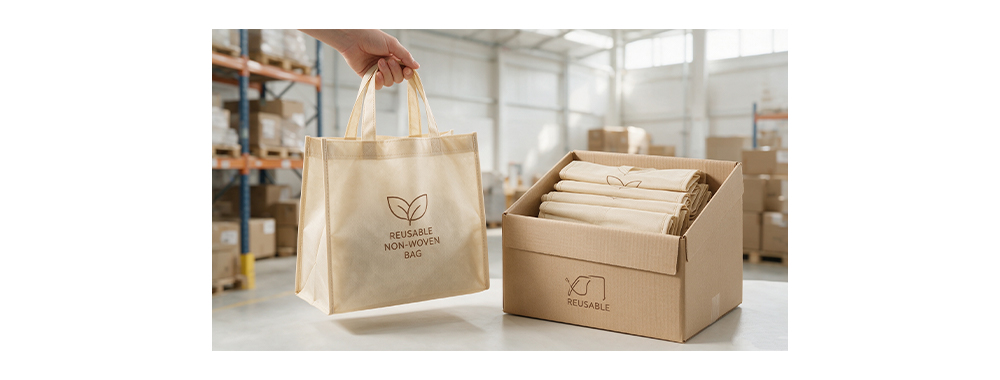
Standard bakery-grade non-woven bags typically weigh between 10 and 20 grams each, adding virtually no extra weight to your product.
In delivery scenarios, the soft, foldable bags take up minimal space inside delivery boxes, allowing riders to carry more orders per trip. Customers enjoy a lightweight carry experience even when holding multiple bags at once. For in-store warehousing, the lightweight nature of non-woven bags also reduces the physical effort required for handling and inventory management.
6. Versatile Printability — Unleash Full Brand Design Potential
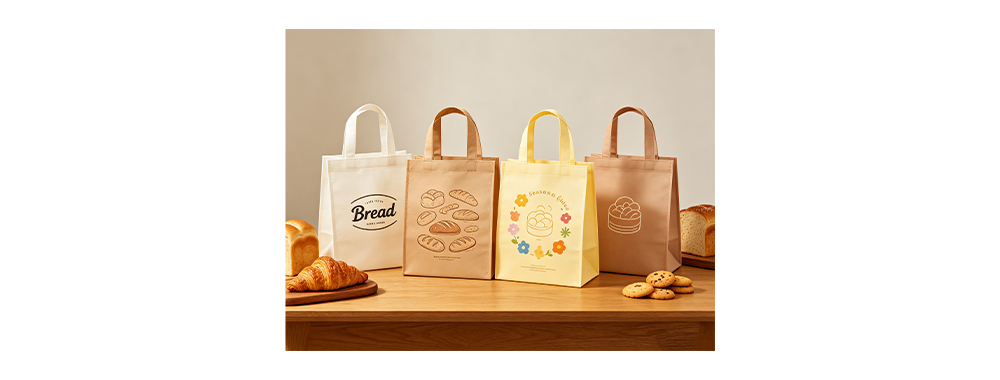
A key driver behind the rapid adoption of custom non-woven bags in the bakery sector is their outstanding print compatibility.
Non-woven fabric works seamlessly with flexographic printing, gravure printing, heat transfer printing, and screen printing—delivering crisp, durable results for fine brand logo details, gradient-color seasonal illustrations, and even small-font informational text. Ink adhesion is strong and colors remain vibrant, with none of the smudging or dulling issues common on other substrates.
This opens up a wide creative canvas for bakeries: seasonal limited editions, IP collaboration designs, birthday-themed bags—all are achievable without material constraints, letting your brand’s visual identity shine through.
7. Flexible MOQ for Small Runs, Significant Cost Savings at Scale
Today’s non-woven bag OEM supply chain is highly mature, capable of flexibly serving bakery businesses of all sizes.
Start-up brands can launch custom production with as few as 3,000 units, effectively lowering the barrier for new product testing or seasonal marketing campaigns.
When brands scale to chain-store operations, orders in the hundreds of thousands are fulfilled with stable lead times, and per-unit costs drop significantly as volume increases.
Over the long term, the total cost of ownership for equivalent-quality non-woven bags is approximately 30% to 40% lower than that of laminated paper bags, contributing to meaningful operational savings.
8. Foldable Design — Save Valuable In-Store Space
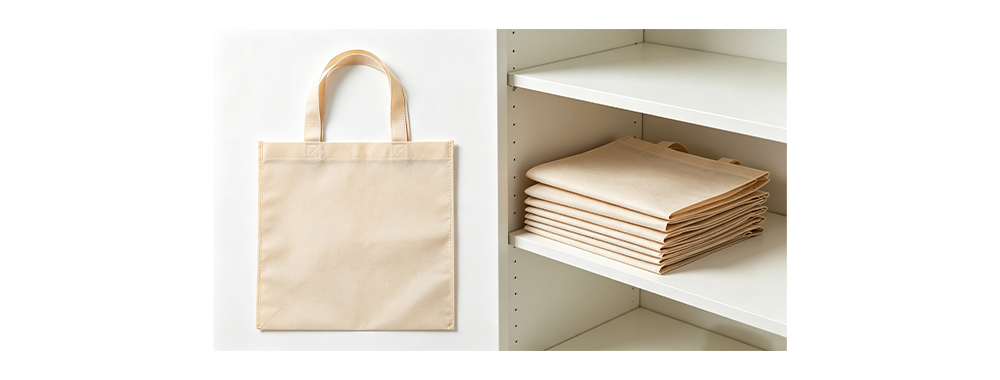
For bakeries with limited floor space, home-based studios, or pop-up market stalls, the foldability of non-woven bags is a major practical advantage.
When not in use, bags can be pressed completely flat—no thicker than a sheet of paper—and stored under counters, between shelf gaps, or inside cash register drawers, eliminating the need for dedicated shelving.
When needed, simply grab one and it opens into shape instantly, skipping the pre-folding step that rigid paper boxes require and freeing up counter space for product displays and ingredient preparation.
9. Food-Grade Safety Compliance
Reputable non-woven bag manufacturers produce their products using food-grade virgin polypropylene (PP) or polyethylene (PE) resins. These materials are odorless and will not react chemically with warm or oily foods, fully meeting regulatory requirements for direct food contact.
Professional non-woven bag factories maintain strict control over raw materials and production processes, ensuring that bags introduce no off-odors or migration risks to bread, cakes, or pastries. Whether packaging ambient-temperature confections, refrigerated desserts, or freshly baked bread, you can use food-grade non-woven bags with complete confidence in safety compliance.
Ⅱ.Frequently Asked Questions (FAQ)
Q1: Can non-woven bags be used to package freshly baked, still-hot bread?
A:Yes. Food-grade non-woven bags offer a degree of heat resistance suitable for warm bakery products. However, it is recommended to allow products to cool slightly before sealing the bag, to prevent excessive steam accumulation inside, which may affect texture.
Q2: How should non-woven bags be cleaned for reuse?
A:For everyday use, simply wipe the surface with a damp cloth. For a deeper clean, hand-wash with mild soapy water. Note that frequent washing may gradually reduce the bag’s structural integrity over time.
Q3: Are non-woven bags recyclable?
A:Yes. Polypropylene (PP) non-woven bags can be recycled through standard plastic recycling channels. Additionally, their high reuse rate inherently extends product lifecycle and reduces overall waste volume.
Q4: What specifications and styles can be customized?
A:Dimensions, colors, handle types (die-cut handles, loop handles, or stitch-reinforced handles), and print designs can all be tailored to your requirements, compatible with various printing techniques and order volumes.
Q5: What is the typical lead time for custom orders?
A:Lead times depend on order quantity, design complexity, and seasonal demand. During the off-peak season (June–August), delivery typically takes 25–30 days. During peak season (September–March), please inquire about lead times before placing your order.
Q6: Can non-woven bags fully replace plastic bags in all bakery applications?
A:In most everyday packaging scenarios, non-woven bags can replace plastic bags—and often outperform them. However, for specialized applications requiring long-term frozen storage or high-barrier protection, supplementary packaging solutions may still be necessary.
Ⅲ.Conclusion
In summary, non-woven bags offer the bakery industry a comprehensive packaging solution that balances functionality, operational efficiency, and brand expression—thanks to their excellent breathability, high strength and durability, superior print performance, flexible cost structure, and reliable food-safety compliance. Whether you operate a single storefront or manage a growing chain, non-woven bags meet the real-world demands of bakery businesses at every scale.
Synberry Package specializes in the R&D and manufacturing of premium food-grade non-woven bags, committed to providing bakery brands worldwide with professional, reliable, and fully customizable packaging solutions. Whether you need a small pilot run or large-scale ongoing supply, we deliver consistent quality, on-time delivery, and competitive pricing you can count on.
For more product information or to request samples, feel free to contact us anytime.