Non-woven bags are not inherently strong, but they can be made much more durable through structural reinforcement. Key improvements include X-shaped stitching and bar-tack reinforcement at the handles, tighter stitch spacing, reinforced side seams, wider handles, and increased fabric weight (GSM).
Made from fibers bonded together through heat pressing or needle punching, non-woven fabric generally has lower tear resistance than canvas or Oxford fabric. However, even non-woven bags with the same fabric weight of 80 GSM can have their load-bearing capacity increased from 5 kg to over 10 kg through proper structural design and manufacturing techniques. With the right reinforcement, they can also withstand repeated use with less deformation.
In other words, the strength of a non-woven bag depends not only on the material itself but, more importantly, on its construction and manufacturing processes. These factors often account for the biggest differences in load-bearing test results.
The following five structural details determine the durability and service life of your non-woven bags.
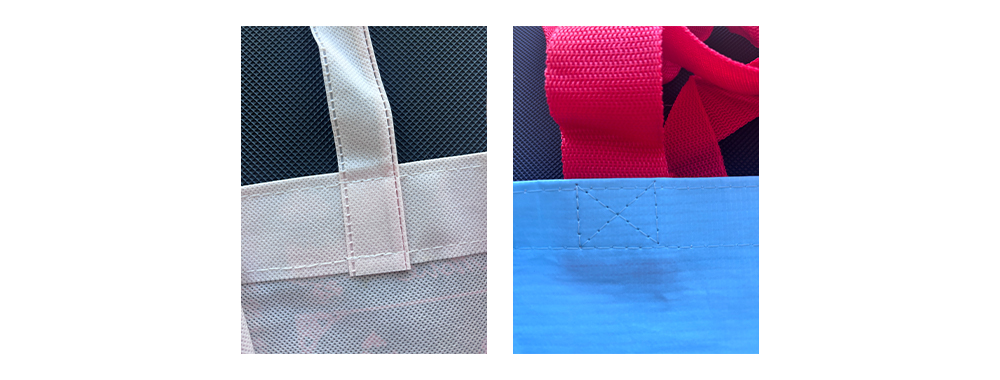
1. Handle-to-Body Stitching Method
The handles bear the greatest concentration of load. In testing, two common stitching methods show significant differences in performance:
| Stitching Method | Key Features | Suitable Applications | Recommended Maximum Load |
| Single Straight Stitch | Parallel stitches concentrate stress along the line of needle holes, limiting durability under load. | Lightweight items and short-term carrying | 5–8 kg |
| X-Shaped Reinforced Stitching | Crossed stitching distributes vertical pulling forces over a larger area of the bag body, reducing stress concentration and preventing tearing around needle holes. | Medium- to heavy-duty shopping bags | 8–12 kg |
Key detail: The fibers in non-woven fabric are bonded together through heat pressing or needle punching, so the material itself has relatively low tear resistance. Needle holes created by straight stitching can become stress concentration points, causing the fabric to split or tear along the stitch line. X-shaped reinforcement distributes the pulling force at the handle attachment, while bar-tack stitching acts like a knot at critical stress points, providing additional reinforcement.
Recommendation from a non-woven bag factory: When customers specify clear load-bearing requirements, upgrade the stitching and reinforcement techniques first rather than simply increasing the fabric weight.
2. Stitch Density and Edge-Binding Techniques
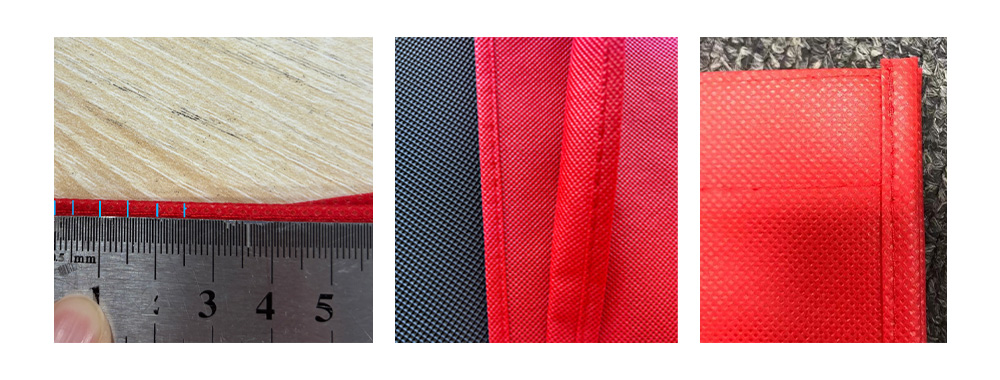
- Stitch Density: Stitch density directly affects the tear resistance of seams. If the stitches are too far apart, there may not be enough friction between the fabric and thread to hold the seam securely, making the stitches more likely to slip under heavy loads. However, stitches that are too close together can cut through the non-woven fibers, weakening the base material. As a general guideline, approximately 5 stitches per inch is recommended to balance seam strength with fabric integrity.
- Edge Binding: Edge binding along the bag opening and sides is essential for preventing the fabric from splitting or tearing at the edges. Unbound raw edges can easily begin to separate or tear along the cut line under stress. Fully wrapping the edges with matching binding tape or reinforced webbing helps secure the fibers and distribute localized stress more evenly throughout the bag structure, significantly improving overall durability.
- Reinforcement at the End of the Binding: Adding multiple back-tack stitches at the end of the binding along the bag opening helps prevent the binding tape from slipping out or unraveling after repeated lifting. This detail is often overlooked, but during long-term load-bearing tests, binding ends without back-tack reinforcement are particularly prone to fraying and unraveling, which can eventually cause the entire binding structure to fail. Just a few additional reverse stitches can ensure that the binding and bag body form a continuous, closed load-bearing loop, further improving the stability of the overall structure.
3. Handle Width and Load-Bearing Surface Area
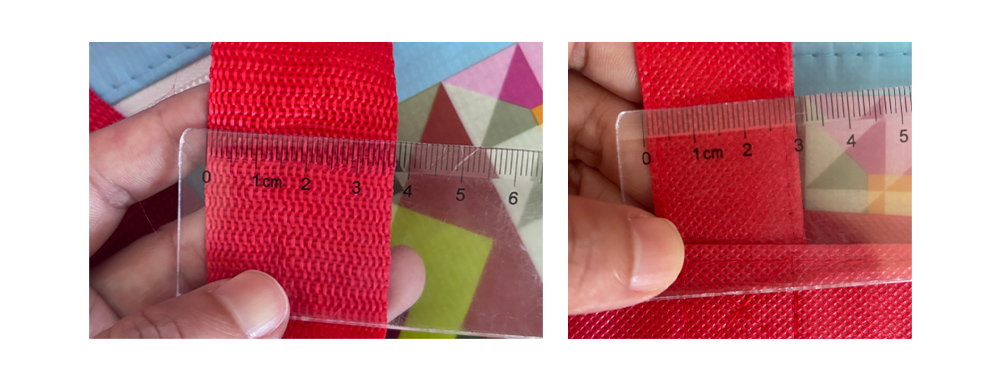
From a physical perspective, narrower handles create greater pressure per unit area and increase the shear stress on the fabric.
Narrow handles (such as those less than 2 cm wide) concentrate stress under load and can cut into the bag fabric like a blade, causing the attachment points to tear rapidly. In contrast, wider handles (such as 3 cm-wide handles) significantly increase the contact area with the bag body, distributing vertical pulling forces across a wider area of fibers and reducing pressure per unit area.
Recommendation from a non-woven bag supplier: For bags designed to carry loads of more than 8 kg, the handle width should be no less than 2.5 cm. If the design requires narrow handles for aesthetic reasons, padding should be added to the inner side of the handles, or a high-strength webbing composite layer should be used to compensate for the limited load-bearing surface area.
In addition, the tensile strength of the handle material itself must be sufficient for the intended load to prevent the handles from breaking before the bag body does.
4. Non-Woven Fabric GSM and Fiber Orientation
Fabric weight (GSM) is certainly a fundamental parameter, but another often-overlooked detail is equally important: fiber orientation.
- Fabric Weight (GSM): The higher the fabric weight, the greater the fiber density generally is, resulting in improved tensile strength and puncture resistance. Most non-woven bags on the market use fabric weighing between 60 and 120 GSM. For lightweight everyday shopping bags, 80 GSM offers a good balance between cost and performance. However, for bags intended to carry more than 10 kg or for gift packaging, fabric weighing at least 100–120 GSM is recommended.
It is worth noting that higher GSM is not always better. Excessively heavy fabric increases costs and can make the bag feel stiff. The ideal fabric weight should be selected according to the intended application.
- Fiber Orientation (Machine Direction and Cross Direction): During manufacturing, non-woven fabric develops distinct machine-direction (MD) and cross-direction (CD) properties.
Tensile strength in the machine direction is generally much higher than in the cross direction. If the handles are aligned parallel to the stronger machine direction, the bag is less likely to stretch or deform under load. Conversely, if the handles are oriented perpendicular to the machine direction, the bag may be more prone to permanent deformation or even tearing under stress.
Therefore, when cutting fabric and preparing bag patterns, it is essential to align the handles with the stronger direction of the non-woven material. This simple manufacturing adjustment can significantly improve durability without increasing material costs.
5. Lamination and Printing Processes
Many customers view lamination and printing as purely aesthetic choices. In reality, these processes can also affect a bag’s durability and load-bearing performance over time.
- Lamination (Glossy or Matte): Lamination helps seal the micropores on the surface of non-woven fabric, reducing moisture penetration that could weaken the fibers. Laminated bags generally offer better structural stability than unlaminated bags, particularly in humid environments or when used to package chilled products.
- Large-Area Full-Color Printing: Ink can penetrate the gaps between fibers and may provide a slight reinforcing effect in some cases. However, the amount of ink must be carefully controlled, as excessive ink can make the fabric brittle.
- Heat Transfer Printing vs. Screen Printing: The high temperatures involved in heat transfer printing may locally alter the structure of non-woven fibers. For this reason, large-area heat transfer printing should be avoided in load-bearing areas, such as handle attachment points and folded seams at the bottom of the bag. By comparison, screen printing generally has less impact on the strength of the base material. Its ink layer is relatively thin, and when properly formulated and applied, it can minimize the risk of fiber embrittlement associated with excessive heat or thick ink layers.
6. Conclusion
The load-bearing capacity of a non-woven bag is never determined by a single parameter. It is the result of a combination of material properties, structural design, and manufacturing processes.
Even when using the same 80 GSM fabric, the right structural improvements can potentially increase a bag’s load-bearing capacity from 6 kg to more than 12 kg. When developing custom non-woven bags through OEM/ODM manufacturing, brands should look beyond fabric weight alone and consider the performance benefits of optimized construction and manufacturing techniques.
An expertly designed 80 GSM bag can often deliver better real-world durability and user experience than a poorly constructed 120 GSM bag. This lightweight, high-strength approach not only reduces raw material consumption and logistics costs but also supports the growing trend toward packaging reduction (Reduce) as part of the 3Rs of sustainability, helping brands strengthen their environmental and social responsibility credentials.
When working with a non-woven bag factory, brands should clearly communicate their load-bearing requirements from the outset. An experienced manufacturer can then recommend the most appropriate combination of materials, structural reinforcements, and production techniques to achieve the desired balance between cost and performance.
7. Frequently Asked Questions (FAQ)
Q1: What GSM fabric is needed for a non-woven bag that must carry 10 kg?
Simply increasing fabric weight is not necessarily the best solution. If a bag uses only single straight stitching, even heavier fabric may struggle to consistently achieve a load-bearing capacity of 10 kg, and tearing around the handle attachment points may still occur.
By contrast, an 80 GSM bag combining X-shaped bar-tack reinforcement, 3 cm-wide handles, and an appropriate stitch density can potentially achieve a load-bearing capacity of 10 kg or more.
Therefore, before starting a custom PP non-woven bag OEM project, brands should prioritize optimizing the bag’s structural design and stitching techniques, then adjust the fabric weight according to actual requirements. This approach helps achieve the best balance between cost and performance.
Q2: Why does my non-woven bag pass static load testing but fail after customers use it a few times?
This is often due to an overlooked factor: dynamic stress.
Static suspension tests only indicate how the material performs under a stationary load. During actual use, however, forces generated by walking, swinging, sudden stops, and abrupt movements can create transient impact loads that are several times greater than the static load.
If the bag lacks reinforced edges or has insufficient stitching area at the handle attachment points, repeated cyclic stress can eventually lead to fiber fatigue and failure.
To address this issue, non-woven bag manufacturers should incorporate dynamic lifting and swinging tests into their pre-shipment quality control procedures. By simulating real-world carrying conditions, these tests provide a more accurate assessment of the bag’s durability and long-term performance.

Q3: Are laminated non-woven bags stronger than unlaminated non-woven bags?
Yes, but the main improvements are in tear resistance and abrasion resistance rather than tensile strength.
The laminated layer acts like a protective shell around the non-woven fabric, helping prevent surface fibers from becoming fuzzy or loosening due to friction, thereby delaying structural deterioration. Lamination can significantly reduce the risk of punctures, especially when the bag is used to carry items with sharp edges or corners.
However, for purely vertical pulling forces, lamination provides only limited improvement in the bag’s overall load-bearing capacity. The key factors remain stitching quality and the GSM of the base fabric.
Q4: Can non-woven bags be washed? Will washing affect their load-bearing capacity?
Routine washing is not recommended.
Although non-woven fabric, particularly polypropylene (PP) non-woven material, has a certain degree of water resistance, its fibers are primarily bonded through heat pressing or needle punching rather than chemical cross-linking. Prolonged soaking or the mechanical agitation of machine washing can weaken the bonds between fibers, causing the fabric to delaminate, soften, or even disintegrate. As a result, the bag’s load-bearing capacity may decrease significantly.
If cleaning is necessary, use a damp cloth to wipe away surface stains and allow the bag to air-dry naturally in a cool, well-ventilated area. Avoid prolonged exposure to direct sunlight, as ultraviolet (UV) radiation accelerates the aging and embrittlement of polypropylene, further shortening the bag’s service life.
For applications that require frequent washing and reuse, reusable bags made from canvas or Oxford fabric are a better choice.
Q5: Are there any industry standards for non-woven bag load-bearing tests?
Currently, there is no single universally mandated international standard specifically governing the load-bearing capacity of finished non-woven bags. Most tests are based on manufacturers’ internal quality control standards or customers’ specific purchasing requirements.
Commonly referenced testing standards include:
- ASTM D5034: A test method for determining the breaking strength and elongation of textile fabrics.
- ISO 12947: A series of standards for evaluating the abrasion resistance of textile fabrics using the Martindale method.
However, these standards primarily evaluate the properties of the fabric itself rather than the dynamic load-bearing performance of a finished bag. For a more reliable assessment, manufacturers should establish finished-product testing procedures that reflect actual usage conditions, including static load tests and dynamic lifting or swinging tests.