In 2026, more than 120 countries and regions worldwide have implemented restrictions or bans on single-use plastic bags. For brands, the question is no longer whether to switch, but what to switch to, how to make the transition, and whether the new solution can become a valuable brand asset.
Non-woven bag have emerged as one of the most suitable alternatives to plastic shopping bags. Compared with plastic bags, they offer significant advantages across multiple key dimensions.
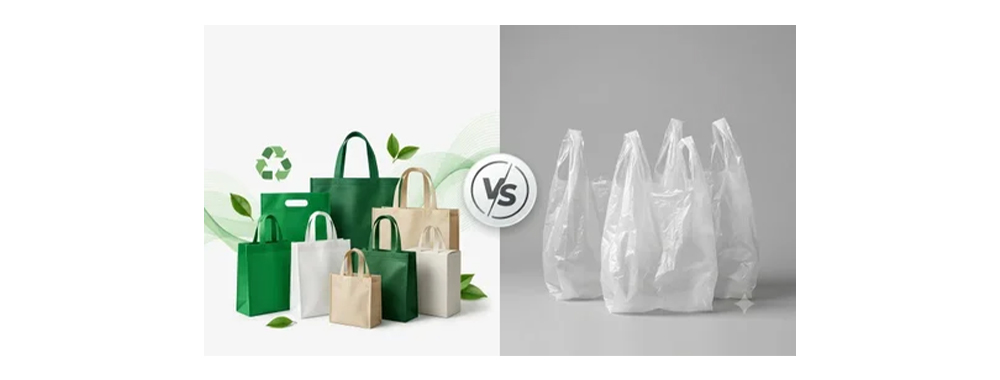
1. The Evolution of Shopping Bags
Shopping bags are an everyday necessity found in virtually every household. They come in a wide variety of forms, ranging from simple transparent plastic bags to custom-branded packaging. Over the past several decades, ordinary shopping bags have undergone dramatic changes, driven by shifting consumer preferences, evolving social values, and growing environmental awareness.
In simple terms, the evolution of shopping bags can be divided into three stages:
1.1 Paper Shopping Bags
Before the 19th century, people typically brought their own baskets or cloth bags when shopping. As commerce expanded, merchants gradually began wrapping goods in paper for customers. A major milestone came in 1852, when American inventor Francis Wolle developed the first paper bag machine. The paper bags it produced resembled envelopes—they were small and relatively fragile.
Several important innovations later transformed paper bags into the standard choice for retail shopping:
- Flat-bottom paper bags: In 1871, Margaret E. Knight invented a machine capable of producing flat-bottom paper bags, allowing them to stand upright while making them stronger and more practical.
- Handled paper bags: In 1912, American grocer Walter H. Deubener invented the first kraft paper shopping bag with rope handles to encourage customers to purchase more items. He later patented the design.
1.2 Plastic Shopping Bags
Despite their popularity, paper bags were eventually replaced by plastic bags. In 1965, Swedish engineer Sten Gustaf Thulin designed and patented the one-piece polyethylene plastic shopping bag. Compared with paper bags, it was lighter, stronger, and far less expensive to produce.
The commercial advantages of plastic bags quickly accelerated their adoption. By 1979, plastic bags accounted for 80% of the bag market in Europe. In 1982, after two major U.S. supermarket chains switched to plastic bags, they almost completely replaced paper bags within just a decade, becoming the dominant shopping bag worldwide. This marked the rise of the era of disposable consumer culture.
1.3 Eco-Friendly Shopping Bags
The dominance of plastic bags began to face serious challenges in the late 20th century. In 1997, the discovery of the Great Pacific Garbage Patch revealed the devastating scale of plastic pollution. Because plastic bags are extremely difficult to degrade, they gradually transformed from a practical invention into a major environmental concern, prompting countries around the world to introduce policies restricting or banning single-use plastics.
These plastic reduction initiatives fueled the rapid development of environmentally friendly alternatives. Today, PP non-woven bags, cotton bags, canvas bags, and other reusable options have become increasingly popular.
Among these alternatives, PP non-woven bags have quickly become the preferred choice for both businesses and consumers. By combining environmental benefits, practical durability, and strong branding potential, they have emerged as the leading solution in today’s eco-friendly shopping bag market.
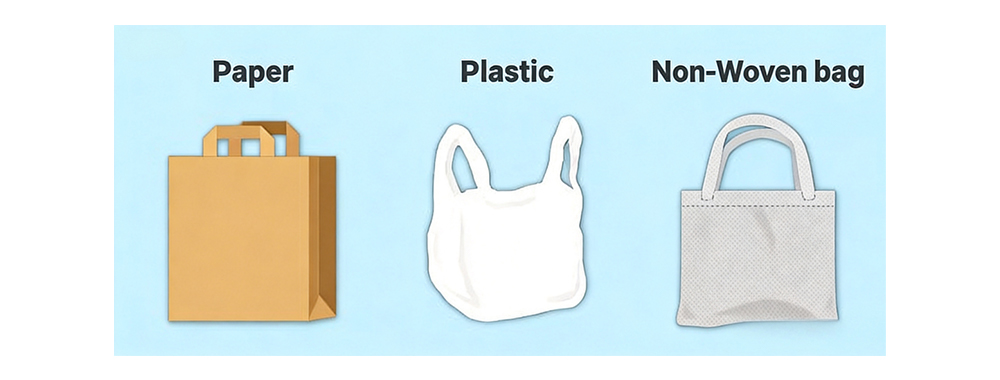
2. Why Are Non-Woven Bags Better Than Plastic Shopping Bags?
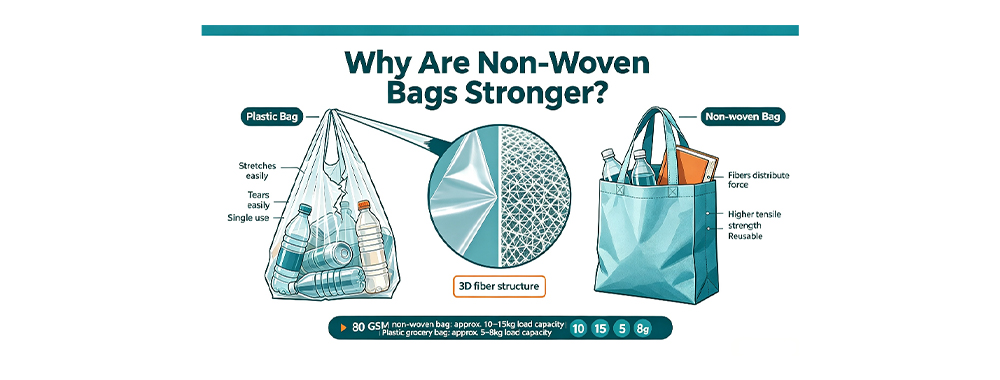
Plastic shopping bags are typically made from low-density polyethylene (LDPE). Their structural strength depends entirely on the thickness of the material, as they have no woven or fibrous framework. In contrast, non-woven bags are manufactured from polypropylene (PP) pellets, which are melted at high temperatures, spun into continuous filaments, and thermally bonded into a fabric-like web, creating a three-dimensional interlocking fiber structure.
This fundamental difference in manufacturing processes results in significant performance differences across several key aspects.
2.1 Load-Bearing Capacity and Durability
The three-dimensional fiber structure of non-woven fabric provides excellent tensile strength, making non-woven bags highly resistant to tearing. They can be reused dozens or even hundreds of times, significantly reducing the cost per use. In contrast, plastic shopping bags are prone to tearing and are generally designed for single-use applications.
A typical plastic grocery bag has a load capacity of approximately 5–8 kg, with the handles being particularly vulnerable to tearing due to stress concentration. By comparison, a polypropylene (PP) non-woven bag (using 80 GSM fabric as an example) features fabric-like tensile strength. Combined with stitched or ultrasonic heat-sealed handles, it can typically support 10–15 kg under normal use. In addition, its capacity can be further increased by incorporating gusseted sides or a gusseted bottom, allowing the bag to accommodate larger or bulkier items.
2.2 Environmental Benefits and Environmental Impact
Conventional non-biodegradable plastic shopping bags can take hundreds of years to fully decompose in the natural environment. Even so-called degradable plastic bags, which contain degradation additives, often do not completely break down. Instead, they fragment into microplastics that persist in soil and aquatic ecosystems for extended periods. These microplastics can eventually re-enter the human body through the food chain, posing long-term environmental and health risks.
By contrast, the primary raw material used in non-woven bags—polypropylene (PP)—is recyclable and can be reprocessed into new products. Under industrial recycling systems and appropriate waste management practices, PP non-woven materials can be effectively recovered and reused, significantly reducing landfill waste. Compared with conventional single-use plastic bags, they also generate far less plastic waste because they are designed for repeated use.
Most importantly, the reusability of non-woven bags dramatically reduces the amount of waste generated per shopping trip. Based on life cycle carbon footprint assessments, a non-woven bag only needs to be reused more than 10 times for its overall environmental impact to become significantly lower than the cumulative impact of using disposable plastic bags for the same number of shopping trips. As a result, non-woven bags make a much greater practical contribution to reducing plastic pollution.
2.3 Premium Texture and Visual Appeal
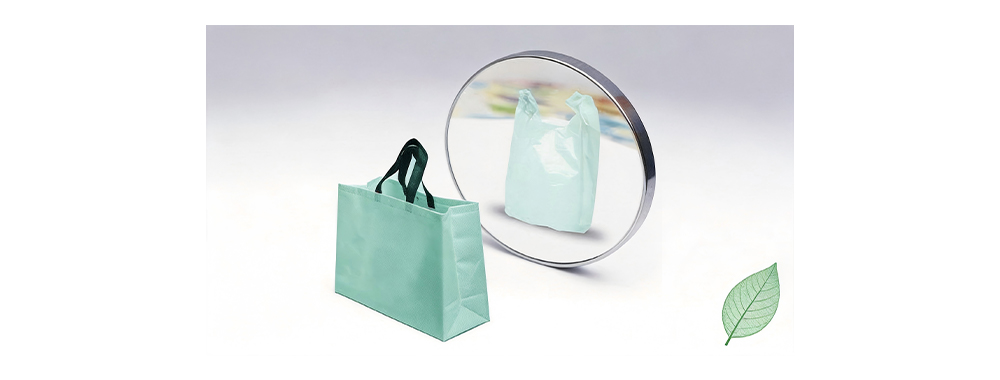
This is another area where non-woven shopping bags significantly outperform plastic shopping bags. Plastic bags are generally thin, flimsy, and cold to the touch. They also offer relatively poor print quality, making it difficult to reproduce intricate brand graphics or detailed text. As a result, they often appear cheap and lack a premium feel.
Non-woven bags, by contrast, feature a fabric-like matte finish with a subtle textured surface that gives them a more substantial, high-quality feel. Their structured construction allows the bags to maintain their shape, creating a more premium appearance. Whether printed using screen printing or heat transfer printing, non-woven bags can produce vibrant colors and sharp, high-resolution graphics. Brand logos, promotional messages, and custom designs can all be displayed clearly and attractively, offering excellent flexibility for brand customization.
2.4 Mobile Advertising and Social Media Exposure
This is perhaps the most commercially valuable—and often overlooked—advantage of non-woven tote bag.
The typical lifespan of a plastic grocery bag is limited to a single trip from the supermarket to the car or home, often lasting no more than 15 minutes. In contrast, non-woven tote bags are durable, stylish, and reusable, making them a regular part of consumers’ daily lives.
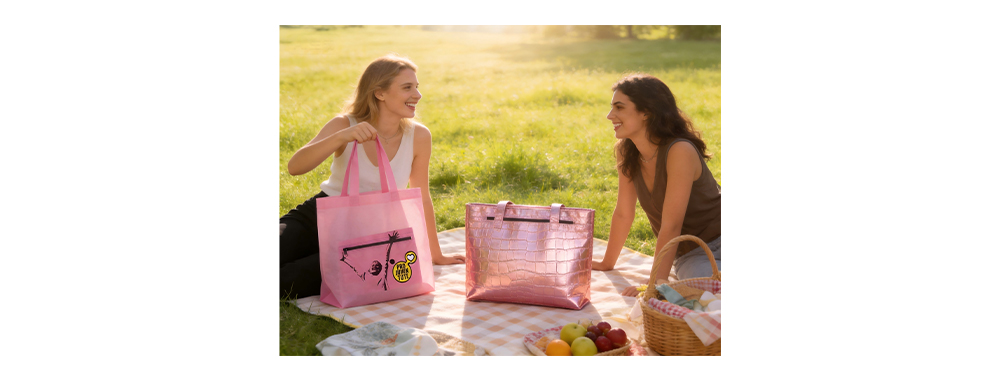
People frequently carry them while commuting, going to the gym, traveling, shopping, attending outdoor events, or enjoying picnics—all of which are high-visibility, high-social-exposure scenarios. Every time the bag is reused in public, your brand gains additional impressions without any ongoing advertising cost, effectively transforming the shopping bag into a mobile advertisement that continues to generate brand awareness long after the initial purchase.
3. How to Choose the Right Specifications for Your Brand?
3.1 Choosing the Right GSM (Fabric Weight)
| GSM Range | Application Scenarios | Load-Bearing Capacity | Texture Positioning | Typical Applications |
| 60–70 GSM | Lightweight promotions, trade show giveaways, small gift packaging | 3–5 kg | Relatively thin, with average stiffness | Exhibition material bags, promotional giveaway bags, brochure bags |
| 80 GSM | Retail supermarkets, chain bookstores, standard shopping bags for fashion brands | 10–15 kg | Balanced thickness with a solid hand feel | Supermarket shopping bags, branded retail bags, everyday commuter bags |
| 90–100 GSM and above | Premium positioning, heavy-duty loading (bottled water, wine, books) | 15–20 kg+ | Thick and sturdy, with a texture close to a soft bag | Premium supermarkets, gift sets, customized bags for wine and beverage brands |
3.2 Selecting Handle and Bottom Construction
| Construction Aspect | Construction Type | Structural Features | Load-Bearing Performance | Suitable Applications | Cost Impact |
| Handle Construction | Ultrasonic Heat-Sealed Handle | Non-woven fabric is directly bonded through ultrasonic welding without stitching | Medium (≤8 kg) | Lightweight promotional bags, trade show event bags | Lowest |
| Stitched Handle | Machine-stitched reinforcement, can be combined with bar-tack reinforcement | High (10–15 kg+) | Supermarket shopping bags, heavy-load carrying bags | Medium | |
| Bottom Construction | Flat Bottom | No side expansion; simplest structural design | General | Lightweight small bags, document bags | Lowest |
| Bottom Gusset | Expandable bottom increases capacity and allows the bag to stand upright | Good | Standard shopping bags, retail bags | Medium | |
| Side + Bottom Gusset | Three-dimensional expansion structure with maximum capacity | Excellent | Large-capacity shopping bags, travel bags, picnic bags | Higher | |
| Bottom Insert | Hard cardboard or PP board inserted into the bottom to improve stiffness and support | Depends on base material | Premium gift bags, bags requiring upright display capability | Additional cost |
3.3 Printing and Finishing Options
If your brand’s primary colors include Pantone spot colors, be sure to require the non-woven bag manufacturer to provide a color swatch/sample confirmation before mass production.
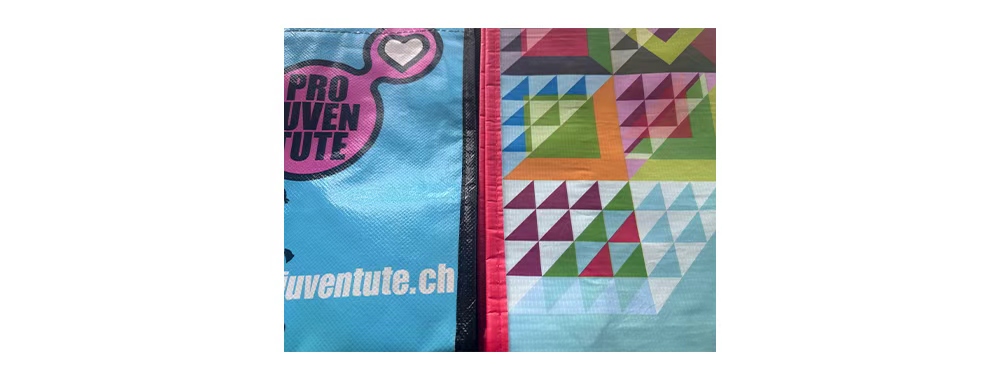
If the design contains complex graphics or detailed patterns, laminated heat transfer printing is often the preferred choice because it delivers higher image clarity and richer visual effects. However, it should be noted that adding a laminated layer may affect the bag’s recyclability and overall environmental performance.
4. FAQ
Q1: Can a laminated non-woven bag still be considered an “eco-friendly bag”?
A: Lamination (usually using BOPP or PET film) is mainly used to enhance printing effects and improve water resistance. However, it can slow down the overall degradation process, and the separation between the laminated layer and the non-woven base material increases recycling difficulties.
If a brand’s core message focuses on “biodegradable” or “compostable”, it is recommended to choose a non-laminated solution with water-based ink printing. If the priority is maximizing brand presentation and visual impact, lamination remains a reasonable choice.
Q2: How much weight can an 80 GSM non-woven bag carry?
A: With standard stitched construction and reinforced handle bar-tack stitching, an 80 GSM non-woven bag typically has a safe load capacity of around 10–15 kg.
If the main items being carried are bottled water, wine, or books, it is recommended to upgrade to 100 GSM fabric or add a bottom insert for additional structural support.
Q3: Will the printing colors on non-woven bags fade?
A: Under normal usage and cleaning conditions, screen printing can maintain color quality for more than two years.
The durability of heat transfer printing depends largely on the quality of the laminated surface. High-quality lamination can prevent graphics from peeling, cracking, or fading over long periods, even with repeated cleaning.
By selecting a qualified manufacturer and reliable production processes, brands can effectively avoid printing fade issues and ensure that the bags continue to provide long-term visual exposure through repeated use.
Q4: Can non-woven bags be washed and reused?
A: Non-woven bags are designed for repeated use. For light stains, they can be cleaned by gently wiping the surface with a soft brush dipped in soapy water, then allowing them to air dry in a ventilated area.
Frequent machine washing is not recommended, as it may damage the fiber structure and reduce the overall service life of the bag.
Q5: What is the difference between biodegradable non-woven bags and regular non-woven bags?
A: Biodegradable non-woven bags contain biodegradable modifying additives in their raw materials. Under suitable industrial composting conditions, they can degrade faster than standard PP non-woven bags, eventually breaking down into carbon dioxide, water, and biomass.
They are better suited for brands pursuing an advanced sustainability positioning. However, their production cost is also generally higher than that of conventional non-woven bags.
Q6: Do non-woven bags have an odor? How can it be removed?
A:Newly manufactured PP non-woven fabric may have a slight processing odor caused by the high-temperature melting and manufacturing process.
In most cases, this odor will naturally dissipate after 24–48 hours of ventilation.
Conclusion
Non-woven bags are not simply a replacement for plastic bags—they represent a higher-level brand communication medium.
They address three major challenges that plastic bags cannot effectively solve:
- Continuous brand exposure through repeated use
- Policy and compliance security through environmentally responsible solutions
- Enhanced brand perception through upgraded texture and design quality
Synberry Package specializes in non-woven bag OEM/ODM manufacturing, customization, and solution design. Based on different brand positioning, load-bearing requirements, and budget considerations, Synberry Package provides a complete service process covering GSM selection, structural design, production craftsmanship, and printing delivery.
This enables brands to smoothly transition from disposable plastic bags to environmentally friendly non-woven bags while achieving regulatory compliance, reducing environmental impact, and gaining continuous brand exposure value.
Under the global trend of plastic restrictions, choosing non-woven bags is not merely choosing a more sustainable shopping package—it is choosing a mobile brand identity card that helps brands move further and more steadily on the path toward sustainable development.