- PP Woven Bag Manufacturing Process: How Are PP Woven Bags Produced?
- 1. Raw Material Preparation (PP Resin Pellets)
- 2. Extrusion and Tape Production
- 3. Fabric Weaving and Lamination Process
- 4. Printing Process
- 5. Cutting and Bag Assembly Process
- 6. Quality Control and Testing
- 7. PP Woven Bag vs. PP Non-Woven Bag
- 8. Frequently Asked Questions (FAQ)
- 9. Why Choose Synberry for Customized PP Woven Bags?
PP Woven Bag Manufacturing Process: How Are PP Woven Bags Produced?
As a professional PP Woven and PP Non-Woven Bags Manufacturer, Synberry has accumulated extensive experience in PP Woven Bags OEM/ODM manufacturing. This article provides a systematic overview of the complete manufacturing process of PP Woven Tote Bags, from raw materials to finished products, helping B2B buyers better understand production details and make more accurate decisions regarding materials and manufacturing processes during customization.
1. Raw Material Preparation (PP Resin Pellets)
The production process starts with PP resin pellets (Polypropylene Pellets). These small plastic pellets are the basic material used for manufacturing PP woven bags. They are produced through chemical polymerization processes using petroleum or natural gas as raw materials.
There are two commonly used types of PP resin pellets:
- Virgin PP: Produced directly through polymerization from petroleum or natural gas. It offers excellent material stability, high strength, and consistent color performance.
- Recycled PP: Produced by processing and re-manufacturing recycled plastics. It provides cost advantages and environmental benefits, but its strength and color consistency may vary depending on the recycling source.
We select suitable raw materials based on customers’ requirements for product strength, color consistency, environmental performance, and budget. For bags designed for outdoor use, UV stabilizers (UV Masterbatch) are also added during the extrusion process to improve resistance against UV aging.
2. Extrusion and Tape Production
2.1 From PP Pellets to Flat Yarn (Extrusion & Tape Drawing)
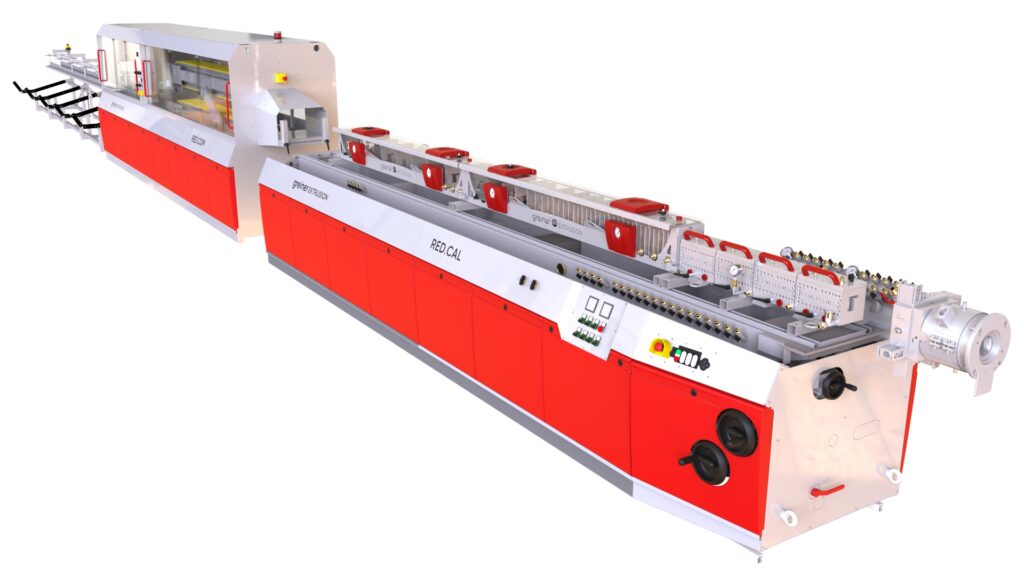
This stage converts PP raw materials into flat yarn (Tape Yarn / Flat Yarn).
PP pellets are mixed with color masterbatch and additives according to specific ratios, then melted, extruded, formed into film, cooled, cut, stretched, and heat-set through an extrusion line. The final result is high-strength PP flat yarn suitable for weaving.
- Melting Temperature:
The melting point of PP pellets is approximately 160–170°C. During actual extrusion, the temperature is usually controlled between 210–280°C to ensure complete plasticization and a uniform molten state. - Film Formation and Cutting:
The molten PP material is extruded through a die head to form a continuous PP film sheet. The film is then cut into multiple narrow PP strips. - Stretching and Heat Setting:
The cut PP strips enter a hot air oven for heat stretching and heat setting. Under high temperatures, PP molecular chains become oriented along the fiber direction, significantly improving tensile strength while fixing dimensional stability.
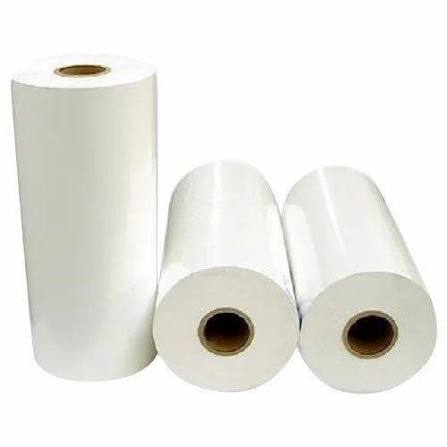
After this process, the flat yarn obtains sufficient strength and durability for the following weaving process.
3. Fabric Weaving and Lamination Process
3.1 Fabric Weaving
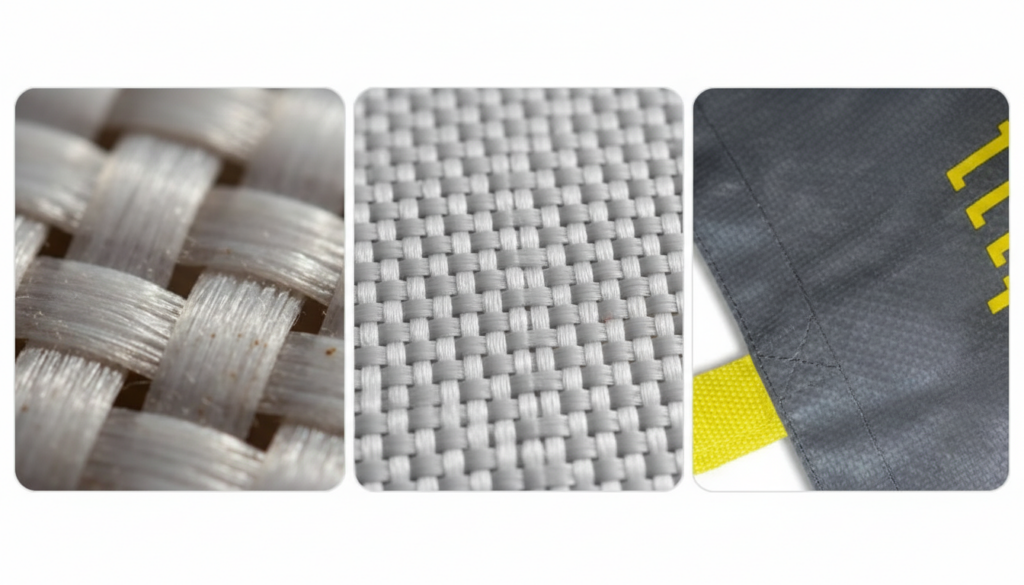
Qualified flat yarn is woven into fabric through a circular loom or shuttle loom. Warp yarns and weft yarns are interwoven to form complete PP woven fabric.
The weaving density directly affects the strength and texture of the bag.
For example, 10×10 means there are 10 warp yarns and 10 weft yarns per inch. In the industry, density is also commonly measured as yarns per 10 cm, such as 32×32 yarns/10cm.
The higher the weaving density, the stronger the fabric and the higher the load-bearing capacity of the finished bag.
3.2 Lamination Process
Lamination is a key process in PP Woven Tote Bag manufacturing, directly affecting the bag’s durability, stiffness, waterproof performance, and printing quality.
PP woven fabric naturally contains many small gaps between yarns, allowing air to pass through easily. Its surface is also relatively rough.
The lamination process involves applying a layer of plastic film onto one or both sides of the woven fabric. This fills the gaps between yarns, providing waterproof and moisture-resistant performance. At the same time, it creates a smoother surface, making printed patterns more vivid and clearer.
Common lamination materials include PP Film (Polypropylene Film) and PE Film (Polyethylene Film). These two materials have significant differences in performance and application.
| Comparison Item | PP Film (Polypropylene Film) | PE Film (Polyethylene Film) |
|---|---|---|
| Basic Material | Polypropylene (PP) | Polyethylene (PE) |
| Bonding with Woven Fabric | ⭐⭐⭐⭐⭐ Excellent (same material, heat fusion bonding) | ⭐⭐⭐ Average (requires temperature control or adhesive layer) |
| Lamination Strength | Higher | Lower |
| Surface Stiffness | More rigid | Softer |
| Hand Feel | Crisp and structured | Flexible with stronger plastic feel |
| Abrasion Resistance | Better | Good |
| Waterproof Performance | Excellent | Excellent |
| Printing Performance | Very good, suitable for high-quality printing | Average, requires special treatment |
| Heat Resistance | Higher | Lower |
| Low Temperature Resistance | Average | Better |
| Cost | Higher | Lower |
| Recycling | Easier to recycle together with PP bags | More difficult to recycle when mixed with PP |
For PP Woven Tote Bags, PP film is generally the better-matched solution, while PE film is more commonly selected when cost control and flexibility are priorities.
4. Printing Process
4.1 Printing Preparation
PP woven fabric is a non-polar material with low surface tension. If ink is directly applied, adhesion is usually poor, which may cause fading or ink peeling.
Therefore, Corona Treatment is usually required before printing. Through high-voltage electrical discharge, the surface tension of the material is increased, improving its ability to bond with printing ink.
4.2 Selection of Printing Methods
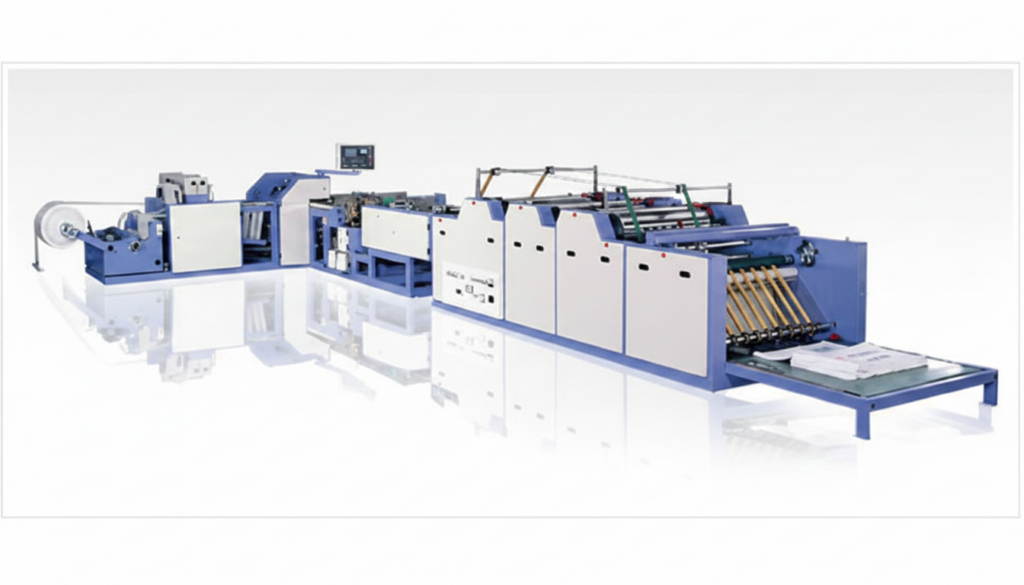
According to order quantity, design complexity, printing accuracy requirements, and cost budget, commonly used printing methods for PP Woven Bags include:
| Comparison Item | Flexographic Printing | Gravure Printing | Screen Printing | Heat Transfer Printing |
|---|---|---|---|---|
| Basic Principle | Ink is transferred through a flexible raised printing plate | Ink is stored in engraved recessed cells and transferred onto the surface | Ink passes through the open areas of a mesh screen onto the material | Design is first printed onto transfer film and then heat-pressed onto the bag surface |
| Printing Plate / Tooling | Resin flexographic plate | Copper engraved cylinder | Screen plate | Transfer paper / film |
| Printing Material | Usually printed on laminated PP fabric or corona-treated PP fabric | Usually printed on laminated PP fabric | Direct printing or printing after lamination | Usually printed on cut fabric pieces or finished bags |
| Suitable Order Quantity | Large quantities | Very large quantities | Small to medium quantities | Small to medium quantities |
| Plate Making Cost | Medium | High | Low | Low |
| Unit Cost | Low | Lowest for large-volume production | Higher | Higher |
| Number of Colors | Commonly 1–8 colors | Multiple colors, capable of very high color counts | Usually 1–6 colors | Multiple colors |
| Pattern Detail | Good | ⭐⭐⭐⭐⭐ Excellent | Average to good | ⭐⭐⭐⭐⭐ Excellent |
| Color Saturation | Good | Very good | Very vivid | Very vivid |
| Wear Resistance | Good | Excellent | Good (thicker ink layer) | Good |
| Suitable for Laminated Bags | ✅ Very suitable | ✅ Very suitable | ✅ Suitable | ✅ Suitable |
| Common Applications | PP packaging bags, shopping bags | High-end packaging bags, food bags | Custom gift bags, promotional bags | Premium custom bags, bags with complex designs |
5. Cutting and Bag Assembly Process
5.1 Drying and Curing
After printing, the ink needs to undergo natural curing or hot-air drying to ensure stable adhesion of the ink layer.
This improves resistance against fading, scratching, and surface damage.
5.2 Cutting and Edge Sealing
After printing, the PP woven fabric remains in large rolls and needs to be cut according to customer specifications into different components, including:
- Front Panel
- Back Panel
- Side Gusset (if required)
- Bottom Panel
- Handle Material
After cutting, the edges of PP woven fabric may become loose or frayed. Therefore, heat sealing edge treatment or binding processes are usually applied to ensure the edges are strong, clean, and durable.
5.3 Handle Production
One of the major differences between PP Woven Tote Bags and ordinary woven bags is the handle structure.
Handles are usually produced separately. Common handle materials include:
PP Webbing
The most cost-effective option, featuring lightweight construction, waterproof performance, and the same material composition as the bag body.
It is suitable for large-volume production of reusable shopping bags.
Polyester Webbing
Provides a smoother surface, better abrasion resistance, and better color stability than PP webbing.
It offers a more premium feel and is commonly used for medium-to-high-end customized bags.
Nylon Webbing
Features high strength, excellent flexibility, and a soft hand feel.
It is suitable for bags requiring higher load-bearing capacity.
Cotton Webbing
Provides a soft and comfortable touch with a natural and premium appearance.
It is suitable for bags with a natural style and high-end positioning.
In practical applications, cotton webbing is less commonly used together with PP Woven Tote Bags.
5.4 Finished Bag Manufacturing
After cutting and handle preparation, the bags enter the bag assembly stage.
There are two main manufacturing methods:
Sewing Process
Sewing is the most common bag assembly method.
Workers use industrial sewing machines to fold or bind fabric edges, attach handles, and stitch different parts together into finished bags.
PP thread or polyester thread is commonly used. Stitch spacing is adjusted according to load requirements, usually around 4–6 stitches per inch.
Advantages of sewing:
- Mature manufacturing process
- High product strength
- Suitable for various complex bag structures
However, sewing requires more labor and production speed is relatively limited.
Heat Sealing / Ultrasonic Welding
This process uses the melting characteristics of PP materials. The material is heated, fused together, and then cooled to form a strong connection.
Advantages:
- No needle or thread required
- Faster production speed
- Cleaner appearance
However, structural strength is usually lower than sewn bags, and load-bearing capacity is relatively limited.
6. Quality Control and Testing
Before shipment, every batch of PP Woven Bags must go through strict quality inspections to ensure stable quality and durability.
| Testing Item | Testing Content |
|---|---|
| Tensile Strength Test | Evaluates the tensile performance of PP woven fabric and flat yarn to confirm load-bearing capability |
| Sewing Strength Test | Checks the strength of stitching at the bottom, side seams, and handle attachment areas, as well as stitch consistency |
| Load-Bearing Test | Simulates actual usage conditions and tests overall performance of the bag body and handles under specified weight |
| Color Fastness Test | Uses friction testing to verify whether printing colors fade or transfer easily |
| Printing Adhesion Test | Uses tape testing to confirm the bonding strength between ink and PP surface |
| GSM Weight Test | Measures weight per unit area to ensure material thickness, density, and specifications remain consistent |
Only products that pass all inspections can proceed to final packaging and shipment.
7. PP Woven Bag vs. PP Non-Woven Bag
Many B2B customers often confuse PP Woven and PP Non-Woven materials.
The main differences are as follows:
- PP Woven:
Made by weaving flat yarns together through warp and weft directions. It features high strength, good stiffness, and a clear woven texture. It is suitable for load-bearing bags, shopping bags, brand packaging bags, and reusable bags. - PP Non-Woven:
Made by bonding fibers together directly through heat pressing or needle punching without a weaving process. It has a softer feel, lower cost, and is commonly used for disposable eco-friendly bags and promotional bags.
8. Frequently Asked Questions (FAQ)
1. What materials are used to make PP woven bags?
PP woven bags are mainly made from polypropylene (PP) resin pellets.
Manufacturers can choose virgin PP, recycled PP, or a mixture of both. Additional additives such as UV stabilizers, color masterbatch, and antioxidants can also be added to improve product performance and appearance.
2. What is the difference between virgin PP and recycled PP?
Virgin PP provides better material stability, higher strength, and more consistent appearance. It is suitable for products requiring higher quality standards.
Recycled PP offers cost advantages and environmental benefits. However, its strength and color consistency may vary depending on the source and quality of recycled materials.
3. Why do PP woven bags need lamination?
Lamination fills the gaps between woven yarns, improving waterproof and moisture-resistant performance while enhancing printing quality and overall appearance.
In addition, lamination can increase the stiffness and durability of the bag, which is why it is widely used for high-quality shopping bags and brand packaging bags.
4. What printing methods are available for PP woven bags?
Common printing methods include:
- Flexographic printing
- Gravure printing
- Screen printing
- Heat transfer printing
The selection depends on order quantity, design complexity, color requirements, and cost considerations.
Gravure printing is suitable for high-definition multi-color designs, flexographic printing is suitable for large-volume production, and heat transfer printing is suitable for small-to-medium orders with complex patterns.
5. What factors affect the load-bearing capacity of PP woven bags?
The load-bearing capacity of PP woven bags is affected by multiple factors, including:
- Quality of PP raw materials
- Fabric GSM (grams per square meter)
- Weaving density
- Lamination condition
- Sewing strength
- Handle design
Before shipment, manufacturers usually perform tensile strength tests, sewing strength tests, and load-bearing tests to ensure that products meet usage requirements.
6. Can PP woven bags be customized?
Yes.
PP woven bags support various customization options, including:
- Size
- Color
- Printing design
- Lamination type
- Handle material
- Bag structure
Manufacturers can adjust materials and production processes according to different application scenarios, such as:
- Customized shopping bags
- Exhibition and trade show promotional bags
- Brand packaging bags
- Reusable eco-friendly bags
9. Why Choose Synberry for Customized PP Woven Bags?
Synberry is a factory specializing in OEM/ODM Bag & Packaging Manufacturing, with years of experience in PP Woven Bag production.
We provide full-service solutions covering the entire process from design, sampling, and production to bulk shipment.
- Professional Sampling Support:
Provide Pre-production Samples and Production Samples for customer confirmation before mass production. - Strict Quality Control System:
Every production stage, from raw materials to finished products, is monitored with quality inspection records. - Global Export Experience:
Products are exported to markets including the United States, Europe, Australia, the Middle East, and other regions. We are familiar with international packaging regulations and logistics requirements.