- I. Screen Printing: The Mainstream Choice for Large-Volume Orders
- II. Gravure Printing Combined with Lamination: The Preferred Solution for Large-Area Color Printing
- III. Heat Transfer Printing: A Flexible Solution for Small-Batch Color Printing
- IV. Digital Direct Printing: A Flexible Production Solution Without Plate Making
- V. Water-Based Printing (Water-Based Paste Printing): An Eco-Friendly and Soft Water-Based Printing Process
- VI. Process Comparison at a Glance
- VII. FAQ
- VIII. Summary
There are five mainstream printing processes in the non-woven bag (Non-woven bag) industry: screen printing, gravure printing combined with lamination (laminated color printing), heat transfer printing, digital direct printing (DTG/UV), and water-based printing. Among them, screen printing is the most widely used in large-volume customization of PP non-woven bags (PP non-woven bag) due to its advantages in cost and durability; gravure printing with lamination is more suitable for large-area full-color patterns; while heat transfer printing and digital direct printing offer outstanding advantages in small-batch, high-precision color printing scenarios.
When customizing non-woven bags (Polypropylene non-woven bag), the choice of printing process directly affects the finished product’s appearance, durability, and unit procurement cost. Many brands only discover in the later stages of product development that their designs are subject to process limitations and cannot be fully reproduced, resulting in a significant difference between the actual product and the expected result. The following provides a detailed breakdown of these mainstream non-woven bag printing processes to facilitate selection and decision-making.
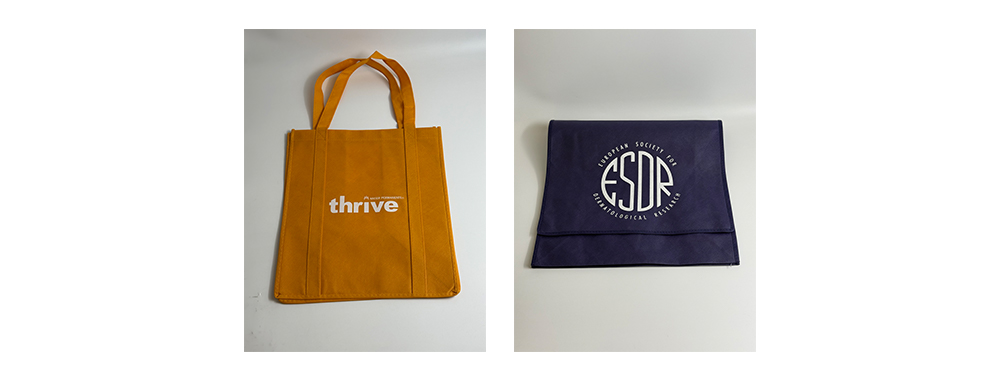
I. Screen Printing: The Mainstream Choice for Large-Volume Orders
Suitable for: Medium- to large-volume customization of non-woven bags (non-woven tote bags / non-woven shopping bags), mainly featuring logos, text, and simple color blocks.
Screen printing relies on a screen to complete the printing process. Ink passes through the pattern openings on the screen and is transferred onto the surface of the bag. The printed pattern has a slightly raised feel to the touch. When printing light-colored logos on dark-colored bags, the coverage effect is relatively good. The plate-making cost is relatively controllable, and printing can be applied to flat surfaces, curved surfaces, and bags with irregular shapes.
Advantages
Strong pattern adhesion and wear resistance; lower per-unit cost for medium- to large-volume orders
Compatible with various irregular bag shapes; light-colored patterns printed on dark-colored fabrics produce relatively good results
Limitations
Relatively difficult to reproduce gradients and shadow effects; industry experience recommends that the design line width should be no less than 0.5 mm
The more printing colors there are, the higher the difficulty of registration alignment
Water-based ink dries relatively slowly naturally, which affects production efficiency to a certain extent
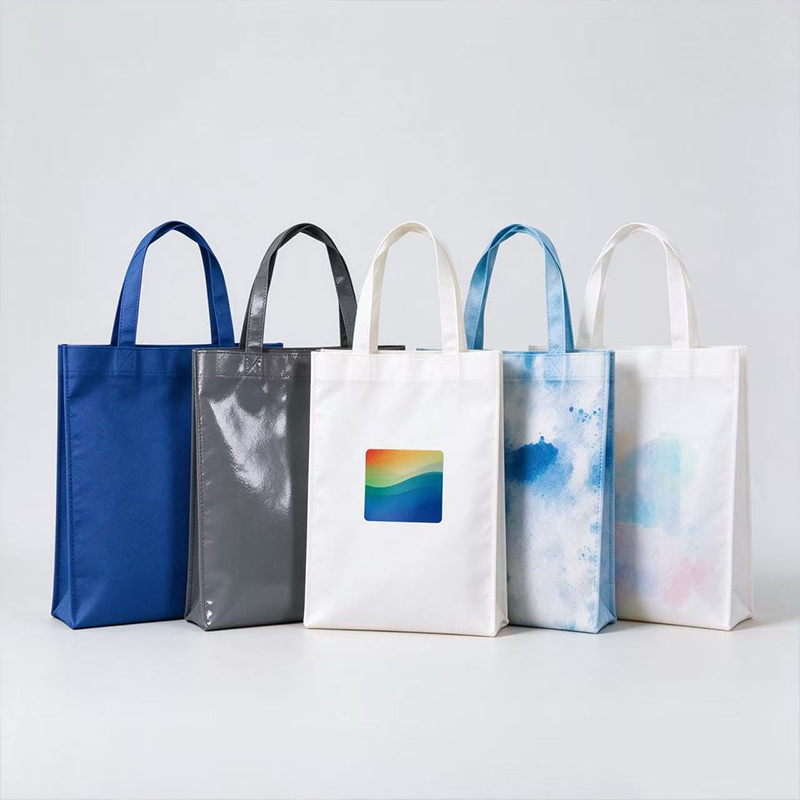
II. Gravure Printing Combined with Lamination: The Preferred Solution for Large-Area Color Printing
Suitable for: Large-volume orders requiring photos or full-color images on laminated non-woven bags (laminated non-woven bag), with no mandatory requirements for degradability or environmental protection.
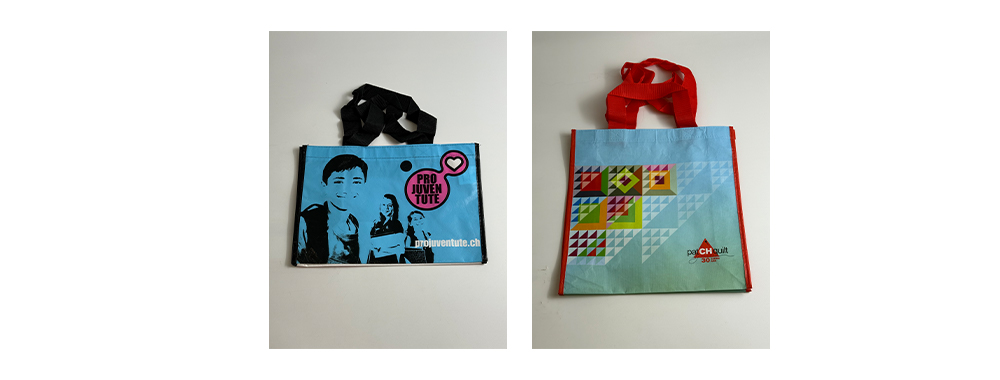
Gravure printing combined with lamination is also known in the industry as laminated non-woven bags (laminated non-woven bag). The processing consists of two steps: first, the graphics and text are printed onto OPP plastic film using a gravure printing machine, and then the patterned film is laminated onto the surface of the non-woven fabric substrate through thermal lamination.
Advantages
High color saturation, with good reproduction of photos, delicate gradients, and full-bag patterns
Fully automated production with stable lead times; the finished product is waterproof, sturdy, and wear-resistant, and is often used as a waterproof non-woven bag (waterproof non-woven bag)
Supports both glossy and matte frosted film surfaces; the matte version offers a more premium texture
Limitations
The plastic film laminated onto the surface weakens the original recyclable and biodegradable properties of the non-woven fabric
The feel of the bag changes after lamination, and the overall cost is higher than that of ordinary screen-printed bags
III. Heat Transfer Printing: A Flexible Solution for Small-Batch Color Printing
Suitable for: Small- to medium-batch orders, personalized customization, e-commerce gifts, and market testing orders, with a greater focus on short-term use scenarios; commonly used for non-woven gift bags.
Heat transfer printing is a specialized printing process that requires transfer film or transfer paper as an intermediate carrier. The pattern is first printed onto the carrier and then transferred onto the surface of the non-woven fabric through high temperature and high pressure.
Advantages
No plate making is required; gradients and color photographic patterns can be achieved, with relatively good color reproduction
Low minimum order threshold and more flexible overall costs; flexible operation, supporting personalized customization of single pieces or small quantities with multiple designs
Limitations
Pattern adhesion is weaker than that of screen printing, and repeated long-term friction may cause wear and peeling
As the order volume increases, the per-unit cost will usually be higher than that of screen printing
IV. Digital Direct Printing: A Flexible Production Solution Without Plate Making
Suitable for: Small-batch trial orders, proofing, and customization projects with complex pattern details; can support extremely small-batch requirements.
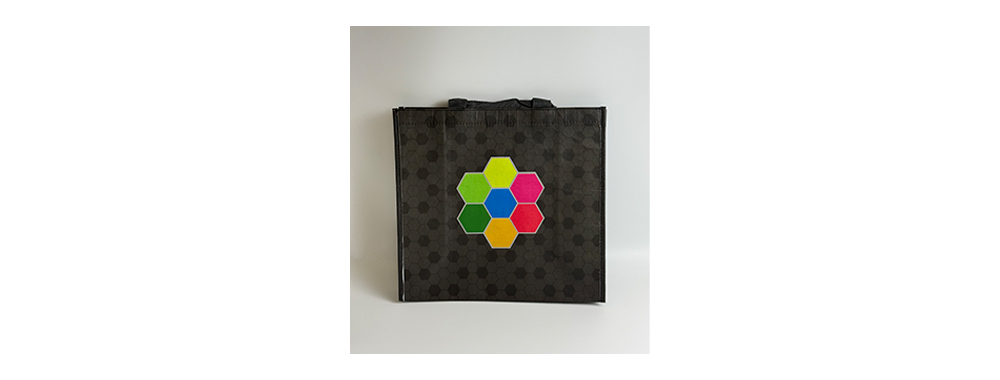
The principle of digital direct printing is similar to garment DTG printing. The ink penetrates directly into the gaps between the non-woven fabric fibers through the print head, eliminating the need for plate making. UV digital direct printing is a new process developed in recent years. It relies on ultraviolet light to cure the ink and does not depend on the fabric’s water absorption, making it primarily suitable for sample proofing.
Advantages
No plate making is required, supporting small-batch proofing; fine lines can be achieved, with the specific lower limit varying depending on the equipment and fabric. Small text and complex gradients can both be reproduced
Ordinary digital direct printing ink penetrates the fibers and provides wash resistance; UV direct printing is suitable for rapid proofing
Limitations
Printing on dark-colored fabrics requires a white ink base layer, which increases procurement costs
The color saturation of ordinary direct printing is not as high as that of heat transfer printing and lamination processes
Large-area printing with UV direct printing will make the surface of the bag feel harder and is not suitable for large-scale mass production

V. Water-Based Printing (Water-Based Paste Printing): An Eco-Friendly and Soft Water-Based Printing Process
Suitable for: Medium-volume orders using light-colored substrates, with a focus on hand feel, low odor, and environmental protection; more widely used for cotton bags and canvas bags, and especially suitable for non-woven bags with eco-friendly, reusable, and sustainable requirements.
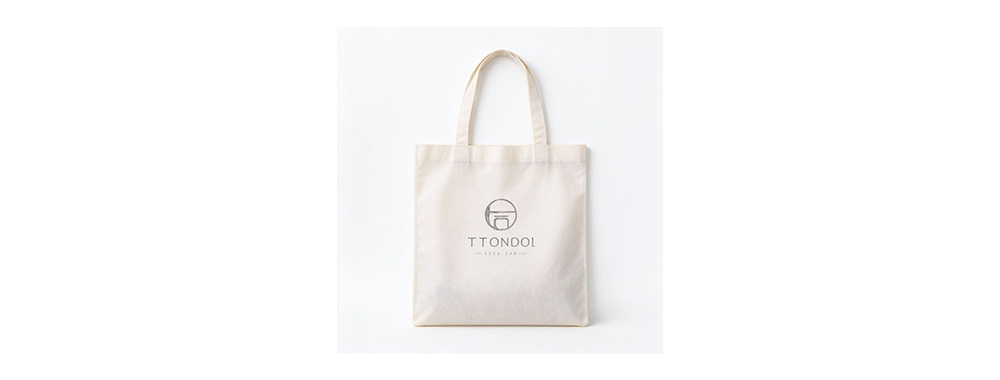
Water-based printing (water-based paste printing) is an independent printing solution. The production process can use screen-printing screens to complete the operation, but it is not equivalent to a branch process of screen printing. Water-based printing uses water-based color paste combined with water-based binder paste to complete the printing; elastic rubber paste is more commonly used for rubber-paste printing, and the two have different paste systems. The printing plate can be rinsed directly with clean water without the need for chemical solvents.
Advantages
The paste penetrates into the fibers, resulting in a soft hand feel, almost no rubbery feel, low odor, and good wash resistance
An entirely water-based system with outstanding environmental performance, in line with the direction of sustainable packaging (sustainable non-woven bag)
Limitations
Relatively weak covering power, making it difficult to achieve light-colored overprinting effects on dark-colored fabrics
More suitable for color blocks and simple patterns, and not suitable for complex full-color images
VI. Process Comparison at a Glance
| Process | Suitable Pattern Characteristics | MOQ Friendliness | Durability | Cost Characteristics | Environmental Assessment |
| Screen Printing | Color blocks, text, simple logos | Suitable for medium- to large-volume projects | Excellent | Plate-making fee upfront; lower unit price for large-volume orders | Relatively environmentally friendly when water-based ink is used; solvent-based inks increase environmental burden |
| Gravure Lamination | Full-color, photo-quality images | Suitable for large-volume projects | Excellent (waterproof) | Unit price is medium to relatively high | Relatively poor; laminated plastic film affects degradation and recycling separation |
| Heat Transfer Printing | Gradients, color photographs | Friendly to small- to medium-volume orders | Medium (prone to wear under long-term friction) | No plate-making fee; relatively stable unit price | Medium; depends on transfer film consumables, with no additional solvent emissions |
| Digital Direct Printing | Complex gradients, fine small text | Supports extremely small-batch proofing | Medium | Friendly to small-batch projects; costs increase for dark-colored fabrics | Relatively good; water-based ink versions are more conducive to environmental requirements |
| Water-Based Printing | Color blocks, simple patterns | Suitable for medium-volume projects | Excellent (wash-resistant) | Medium | Excellent; entirely water-based system with no chemical solvent cleaning |
VII. FAQ
- Q1: What is the most commonly used printing process for non-woven bags?
- A: Screen printing. Screen printing is one of the more widely used printing methods in the non-woven bag industry. It has moderate plate-making costs, a substantial ink layer, and good pattern adhesion, making it suitable for the bulk printing needs of most brand logos and simple patterns.
- Q2: Which process can print photo-quality color patterns?
- A: For large-volume projects, gravure lamination is preferred; for small- to medium-volume projects, heat transfer printing is preferred. The gravure lamination process provides better color saturation and uniformity and uses fully automated machine production, making it suitable for large-volume color orders. Heat transfer printing is more flexible for small- to medium-volume scenarios, without the cost and environmental concerns associated with film lamination.
- Q3: Which process should be selected for small-batch customization?
- A: Heat transfer printing or digital direct printing is preferred. Digital direct printing offers stronger detail reproduction and is suitable for designs with complex details; printing on dark-colored fabrics requires a white ink base layer, which increases costs. The actual selection should be comprehensively evaluated based on pattern complexity, fabric specifications, and project budget.
- Q4: Can screen printing produce gradient colors?
- A: It is not recommended to rely on screen printing to achieve gradient effects. Screen printing has limited ability to reproduce gradients and is more suitable for patterns with clear color blocks and a small number of colors. Industry experience recommends that the line width should be no less than 0.5 mm. If gradient, shadow, or photographic effects are required, heat transfer printing, digital direct printing, or gravure lamination should be considered first.
- Q5: Are laminated non-woven bags environmentally friendly?
- A: The environmental impact needs to be carefully evaluated. The lamination process adds a layer of plastic film to the surface of the non-woven fabric. This film can negatively affect the material’s biodegradability and weaken the inherent recyclability of the non-woven fabric. If a brand has clear requirements for environmental certifications (such as compostability or biodegradability), laminated bags should be selected with caution.
VIII. Summary
When choosing a printing process for non-woven bags, the decision should be based primarily on four dimensions: pattern complexity, order volume, usage durability, and environmental compliance. Simply put: choose screen printing for simple logos in medium- to large-volume orders; choose gravure lamination for large-volume orders with color photo patterns; choose heat transfer printing for color customization projects with limited order volumes; choose water-based printing for light-colored bags when environmental friendliness and hand feel are priorities; and choose digital direct printing for proofing and small-batch projects with complex details.
The selection of printing process is influenced by multiple factors, including design files, order volume, fabric specifications, and compliance requirements. As a professional non-woven bag supplier and non-woven bag manufacturer, we provide OEM/ODM customization services, sample support, and quotations for non-woven bag procurement projects such as brand packaging, promotional gifts, and retail shopping bags. If you need process evaluation or cost estimation, please feel free to contact us and provide your design files and project information.